
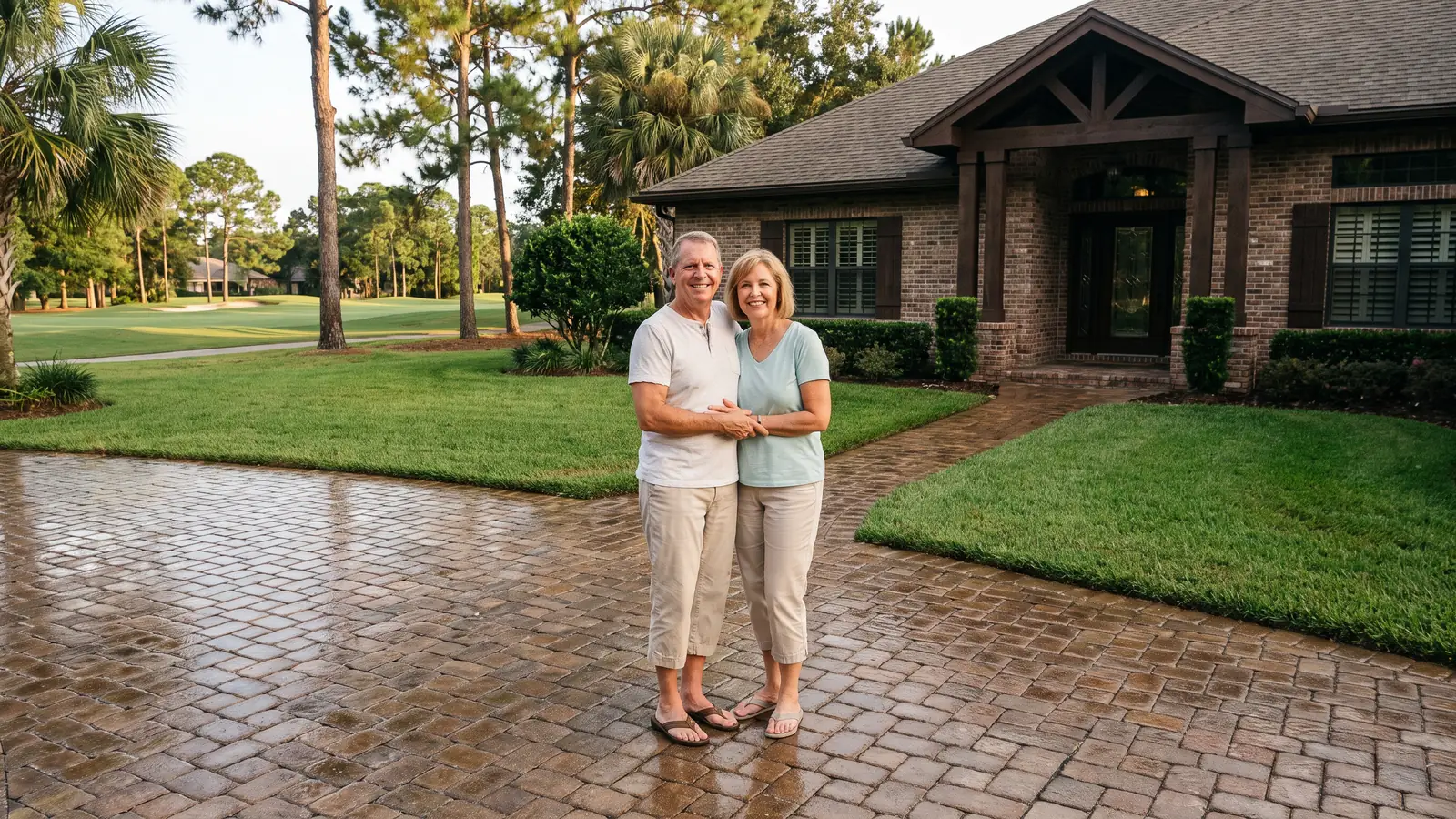
Paver sealing for San Marco homes
Paver Sealing in San Marco, FL
San Marco brick walks, oak-shaded drives and pool decks can get paver sealing and a free estimate, so call (904) 817-0508.
- Brings out deeper paver color
- Fresh joint sand helps lock pavers in place
- Gives weeds less room to grow
- Makes the surface easier to keep clean
- Free estimate, no obligation
Request a Free Estimate
Free, no obligation.
Fast, careful paver sealing in San Marco
Paver sealing in San Marco is available for brick walks, concrete drives and pool decks from Hendricks Avenue to the river, and the estimate is free. A local contractor handles the wash, the sand and the coat. Call (904) 817-0508, and expect an answer within 1 business day, often much sooner.
Think of the stone walk to your front door with a brown tea stain from the oak overhead and joints gone soft. A proper wash, fresh sand and the right sealer bring the color back without hiding the age of the brick. The result looks cared for, not new, which suits a neighborhood whose first buildings went up in 1926. If you would rather write first, you can ask for a free estimate and describe what you see.
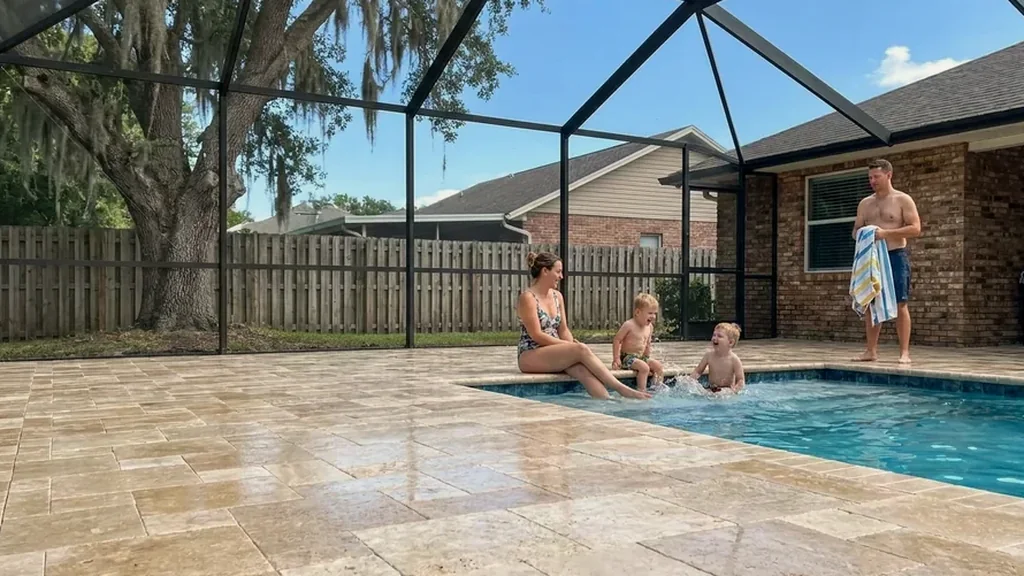
Why hire a local paver sealing contractor in San Marco?
San Marco homeowners hire locally because old brick, big oaks and high-water history all change how a paver job should be planned. To see how that applies to your street, ask for a free estimate.
Brick, concrete or stone
Tell the contractor what your San Marco walk is made of. The free visit begins there, because each material takes a different product.
Check bids against the range
Companies here publish $1.75 to $3.25 per square foot for wash, sand and seal. A San Marco bid should explain any gap from it.
Historic-district awareness
If your address sits in a local district, the city may want a Certificate of Appropriateness for exterior work. Ask what to look up.
Reply in a business day
Send your details and hear back within 1 business day. Booking is never required.
Get Your Free Estimate in San Marco
Tell us about your pavers in San Marco.
Free, no obligation
What paver problems show up most in San Marco?
Brown stains under the live oaks
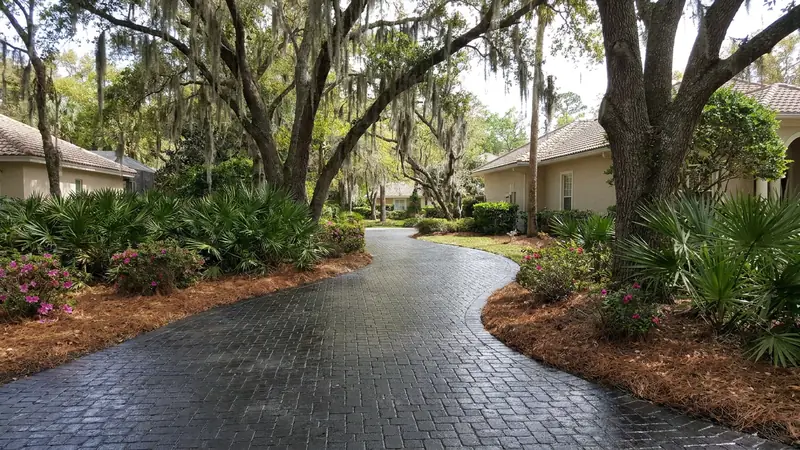
Safe Touch says anything under a live-oak canopy picks up brown water stains from oak tannin on drives and walks. San Marco's parks show how thick that cover gets, with oaks at Belmonte Park and a live oak and magnolia canopy at each end of Largo Well Park. If your walk sits under the same kind of branches, expect tea-colored patches. Sealer then keeps the next season's stain from soaking in. A wash alone brings the color back, but only for a while on bare, open pavers.
Old brick that cannot breathe
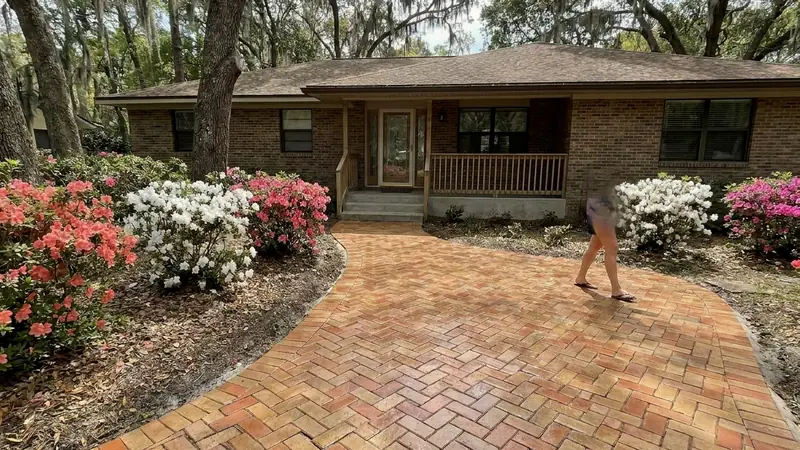
San Marco broke ground in 1925, so some brick work here is nearly a century old. A Northeast Florida paver company says old clay brick usually takes a breathable penetrating sealer, because a film sealer can trap moisture and cause flaking and haze. A yard that mixes brick and concrete may need two products. The contractor should test a small spot before choosing. That costs little compared with stripping a product that did not suit the brick. Alexandria Place, inside the San Marco area, has a median build year of 1939, so brick walks there are among the oldest in the neighborhood.
Salt-and-tide water on low lots
The St. Johns River is an estuary near Jacksonville, and tides push far upstream. Irma's high water in 2017 flooded homes in San Marco, and a River Road house showed a high-water mark near 5 feet. Water that sits on pavers leaves silt and film behind, and a wash takes longer when that film has dried in. Sealer would trap that film, so the wash has to be thorough. Ask the contractor to look at the low corners of the yard, where water lingers longest.
Joints that wash out after heavy storms
Jacksonville gets about 52 inches of rain a year, much of it in short summer downpours. In San Marco, residents have described streets knee deep at times and wakes pushing water into yards. Fast-moving water pulls sand from the joints. Once the joints sink, soil settles in and weeds take hold. Fresh sand and a sealer that stabilizes it slow that cycle down, which saves you from patching joints every spring. The LaSalle Street pump station is meant to move water back to the river, but a builder said it will not remove all flooding.
White film on pool decks
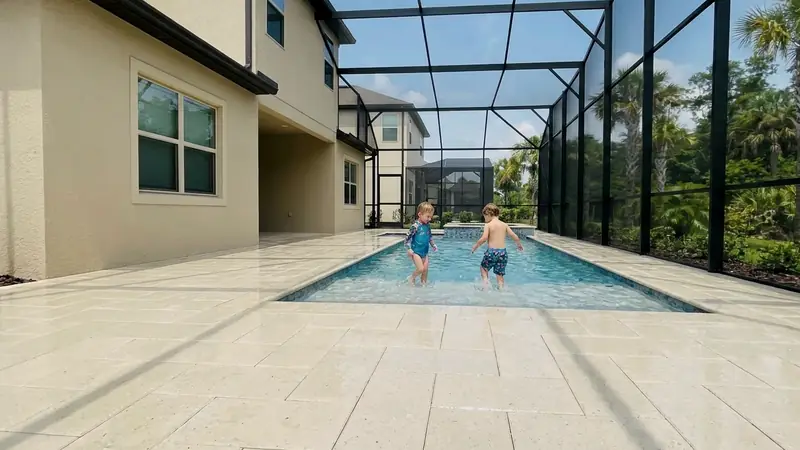
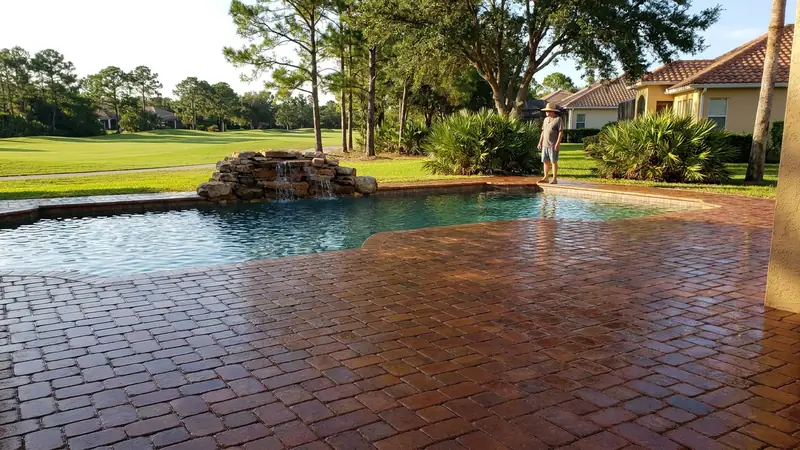
PaverGuard says pool decks in San Marco and Riverside see chlorinated splash-out that dries white on the surface. It says decks with chlorine or salt systems often come due at 18 to 24 months between seals. That white film needs to be washed away before any coat. Ask about a finish that keeps some grip when wet. Penetrating products tend to hold traction better than a glossy film on a wet deck.
Do San Marco's historic streets change how pavers get sealed?
They can, since the city requires a Certificate of Appropriateness for exterior work, driveways included, in a local historic district or on a landmark. San Marco's Preservation Society formed in 1975, and the neighborhood has Mediterranean-inspired homes laid out with winding streets and planted medians. Jacksonville's online Land Development Map lets you look up your own address. Check it first, since the answer can change which products are allowed, then ask for a free estimate.
Colonial Manor and South Riverside sit inside San Marco, with St. Nicholas just east. Fletcher Park began as a World War I housing project for shipyard workers, and Alexandria Place has a median build year of 1939. Homes from different decades mean pavers of different ages. Call (904) 817-0508 and tell the contractor which part of San Marco you live in, so the quote starts from the right assumptions.
Wherever you are, the finish matters. Matte keeps old brick looking like itself, while a wet look deepens color but shows scuffs sooner on a drive that sees daily tires. Penetrating products leave the look almost unchanged, which suits historic brick. If a historic board or an association has a say, ask early, then ask for a free estimate so the contractor can plan the product around it.
What does paver sealing cost in San Marco?
San Marco quotes start from the range regional companies commonly publish, $1.75 to $3.25 per square foot. What moves a San Marco job inside that range is the prep, which one Jacksonville guide calls most of the cost. Oak stains, lost joint sand and old sealer all add time. If you want a figure for your own walks, ask for a free estimate.
Material matters here too, since brick and travertine are more porous and need different sealer chemistry than concrete pavers. Tight side yards and small courtyards also push the rate up, because setup does not shrink with the area. Call (904) 817-0508 and the contractor can talk through which of these apply to your lot. A photo of the surface helps, and so does a rough length and width.
| Paved area | Typical example | Clean, sand and seal |
|---|---|---|
| 300 sq ft | Small patio or walkway | $525 to $975 |
| 600 sq ft | Two car driveway | $1,050 to $1,950 |
| 1,000 sq ft | Large driveway or pool deck | $1,750 to $3,250 |
| 1,500 sq ft | Driveway plus pool deck | $2,625 to $4,875 |
Math based on the $1.75 to $3.25 per square foot that Northeast Florida paver companies published as of November 2026. Your contractor sets the actual price after seeing the surface. Repairs, leveling and stripping failed sealer are usually extra.
How does a paver sealing job work in San Marco?
Look at the surface and the history
The contractor checks what your San Marco pavers are made of and whether an older coat is down. Oil-based sealer from an earlier job must be stripped first, and water-based sealer cannot go over solvent-based. Low or sunken sections get reset, since sealing over a dip only preserves it. Mention any past high water on the lot. That history changes how much washing comes first.
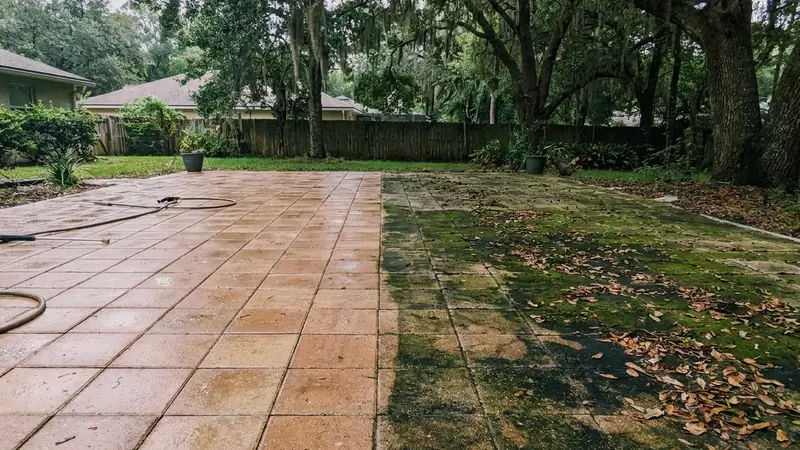
Wash away tannin, film and old stains
The wash lifts oak stains, river film and green growth. Oil and rust are pre-treated, though some deep marks will not come out completely, and a good contractor says so up front. Rinse water stays off older wood and masonry where the pavers meet the house. On brick, gentle cleaning protects the face of each piece. High pressure can strip the surface and loosen joints. A yard that took river water in Irma or a later storm may carry extra film, so tell the contractor if yours did.
Seams filled again
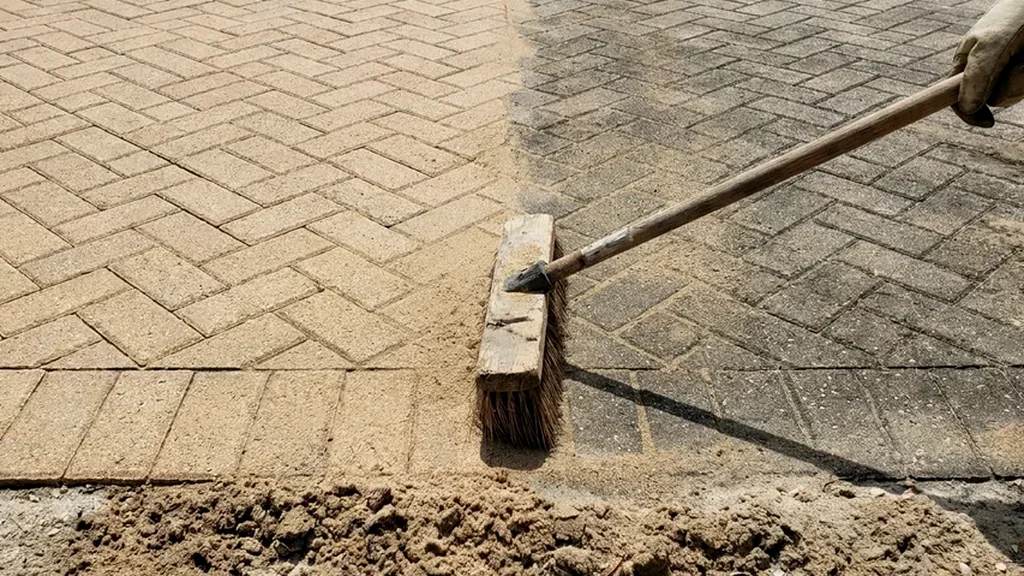
Cleaning pulls out joint sand, so silica sand is swept back in. Full joints resist the weeds that follow lost sand, and they keep each paver snug against its neighbors, which helps a brick walk stay level through summer storms. Colored sand is an option if you want the joints to blend. Heavy rain in the days before can slow this stage. A damp joint will not take sand evenly.
Let the pavers dry
Sealer needs a dry surface. One Jacksonville company says nearly every white-sealer complaint traces to damp pavers or a coat laid on too thick. Under oaks, a patio dries more slowly than an open driveway, and a walk beside a brick wall may stay damp even longer. The contractor waits for a dry window rather than rushing. In summer that can mean an early start before the afternoon storms build.
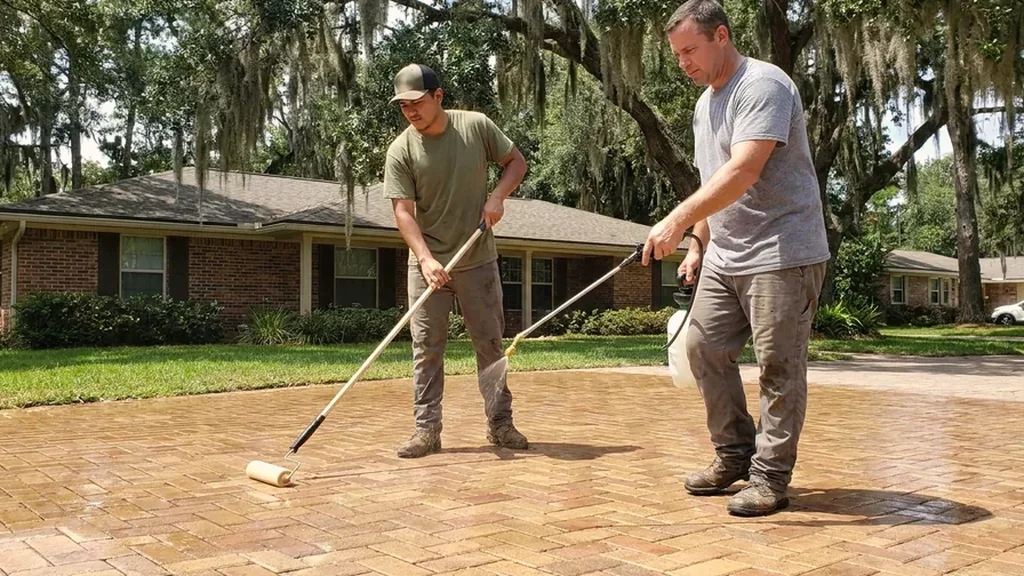
Seal and set the stay-off time
Sealer goes on by spray, then a roller follows to even it out. One Jacksonville company asks for 2 to 4 hours before foot traffic and 24 hours before cars. The usual span is two to five years between coats, with pool decks coming due sooner. Matte or wet look is your call. Ask to see a sample if you are unsure how the color will turn out. Plan where visitors can park for the day.
Complete paver services in San Marco
A San Marco job starts with a look at the surface, then a wash, fresh joint sand, a dry-out and the coat. Prep takes the most time, and one Jacksonville company says it spends two to three hours of prep for every hour of sealing. That is why a bid can look high for a small courtyard and still be fair. Call (904) 817-0508 to ask how that plays out on your walks.
The surfaces here run from historic brick walks to concrete driveways and pool decks. Brick and travertine are porous and need their own sealer chemistry. Pool decks add chlorine splash and a need for grip, so the same product may not suit every part of your yard. Tell the contractor what you have when you ask for a free estimate.
Finish choice is more than looks, because film sealers give a matte, satin or wet look and sit on the surface, while penetrating sealers soak in and leave the color alone. On old clay brick, breathable is the safer route. A porous stone or brick often calls for the second kind. Call (904) 817-0508 to talk through which suits your front walk.
Timing in San Marco depends on rain and tide. Summer storms arrive fast, and low lots near the river can stay wet longer. Sealer needs a dry surface and cars stay off about a day, which is easy to plan on a street with a long driveway and harder on a short one. To find a window that works, ask for a free estimate.
Questions to ask before you hire
- Will you test a small spot of my pavers before you pick a sealer?
- Do you fill the joints before sealing, and with what?
- What does the price per square foot include, and what costs extra?
- What finish do you recommend for my pavers: matte, natural or wet look?
- Can you give me a start time window so I can plan around it?
- How long do I keep cars and foot traffic off the pavers?
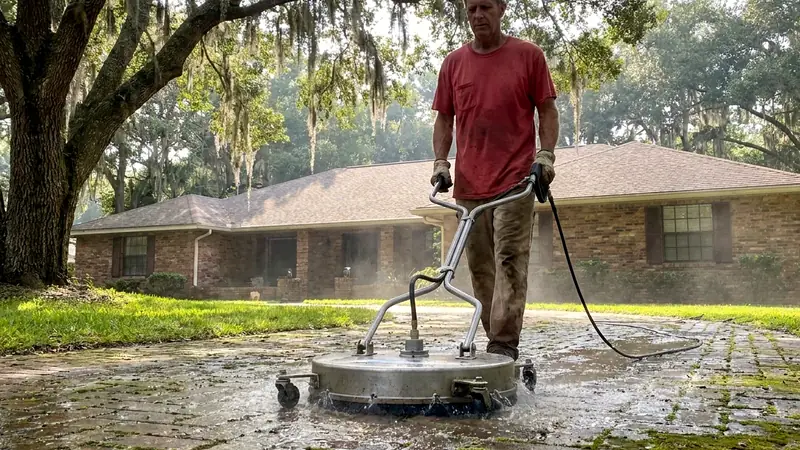
- Do you wash with a surface cleaner or a hand wand?
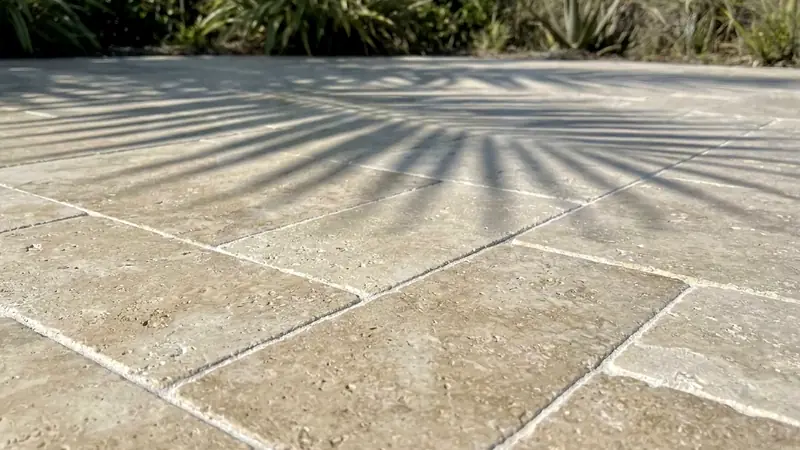
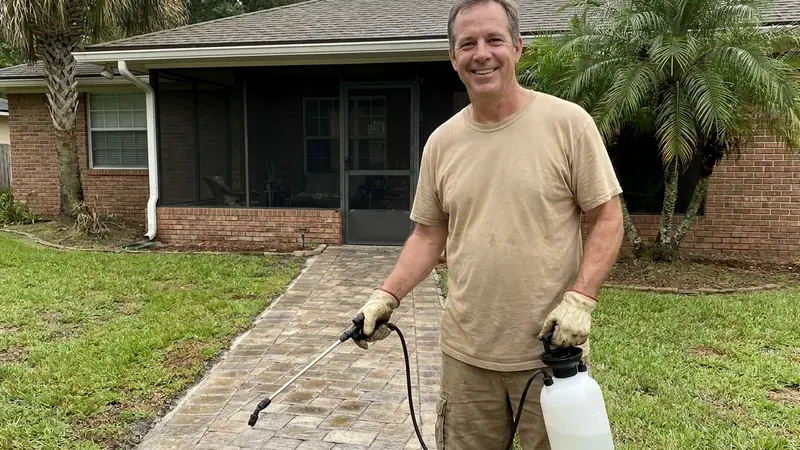
What do sealed pavers look like around San Marco?
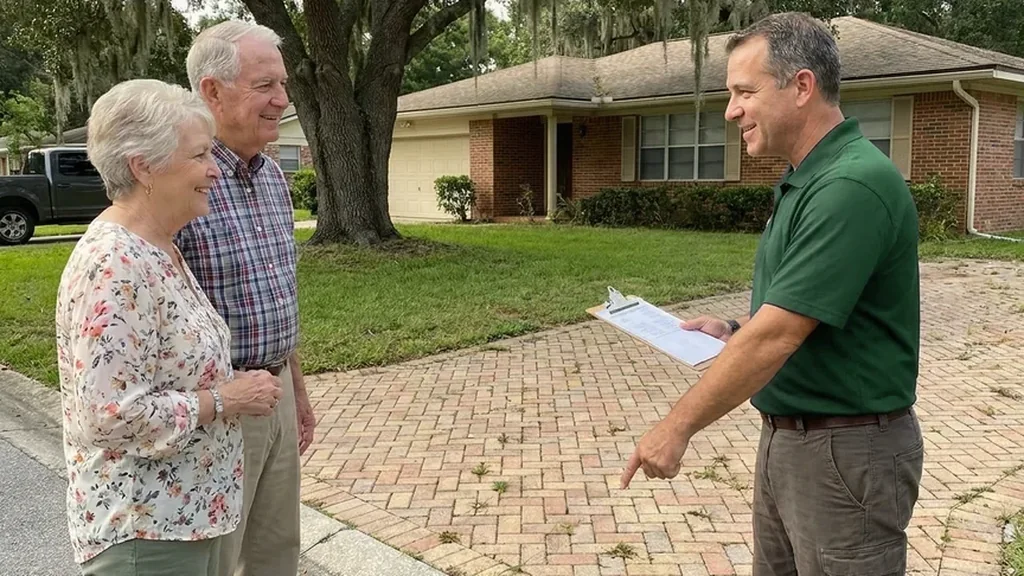
Why local matters in San Marco
A contractor who knows San Marco asks about water first. The city called the LaSalle Street drainage project complete in October 2026, and its pump station can move up to 60,000 gallons a minute. Residents were still reporting flooding in July 2025, and low spots in your yard decide how long pavers stay wet. To talk through yours, call (904) 817-0508.
Local knowledge also covers the trees. San Marco has 14 parks, many shaded by oaks and magnolias, and that canopy shades private walks too, so tannin stains and green film are common here. Someone from the area plans a gentler wash and a longer dry time, which protects older brick. You can ask for a free estimate to ask how that would work for your yard.
Then there is the age of the neighborhood. With homes from the late 1920s forward, one block can hold brick, concrete and stone side by side. A local contractor knows to ask what is under your feet before choosing a product. If you are unsure of yours, ask for a free estimate and describe it.
What is San Marco known for, and why does it matter for pavers?
San Marco is known for Mediterranean-inspired homes, big oaks and a walkable square, and that mix shapes paver care. Its 250 lots sold in three hours in 1925, and the Art Deco San Marco Theatre opened in 1938. Marco Lake began as a brickyard clay pit and now has a canal out to the river. Near the Square, ask for a free estimate to ask about the brick or concrete at your own front door.
Look around and you will see the neighborhood's past. Theatre Jacksonville's building on San Marco Boulevard joined the National Register in 1991, and Fletcher Park started as wartime housing in 1919. The Treaty Oak stands in a city park off Prudential Drive, and Hendricks Avenue is now busy with new apartments. Near any of these places, call (904) 817-0508 and give your cross street, so the contractor can picture the block and its trees.
Frequently Asked Questions
Is it good to seal pavers in Florida, and does it suit San Marco brick?
Yes, a coat guards pavers against sun, rain and stains. Old clay brick usually takes a breathable penetrating sealer, since a film coat can trap moisture and cause haze. A contractor should test before choosing.
Can I clean, sand and seal my pavers in San Marco in one visit?
Yes, those steps usually go together in the order of wash, sand, dry and seal. Prep is the longest part. One Jacksonville company spends two to three hours on prep for every hour of sealing.
How much is sealant for pavers in San Marco?
Regional companies commonly publish $1.75 to $3.25 per square foot to clean, sand and seal, and San Marco jobs fall in that span. The sealer itself is a small part of that figure. Prep, stain treatment and any stripping drive the total.
Is it better to spray or roll paver sealer in San Marco?
Both, according to one Jacksonville company. Pros typically spray for even coverage and then back-roll to work the sealer into the joints and prevent puddles. Rolling alone risks lap marks, and spraying alone risks too heavy a coat.
What are the downsides of sealing pavers in San Marco?
Sealer wears and needs a fresh coat, and a wet look shows scuffs sooner than matte. It also needs a dry surface, so rain can move the date. On porous brick, the wrong product can trap moisture.
Do I need city approval to seal pavers in San Marco?
Only when your address sits in a local historic district or is a designated landmark. Then Jacksonville requires a Certificate of Appropriateness for exterior work, and driveways are named as an example. The Land Development Map shows whether your address applies.
How soon after flooding can my San Marco pavers be sealed?
Once they are clean and fully dry. After high water, the contractor needs to wash off river film and replace lost joint sand first. Sealing over silt or damp pavers locks the problem in.
How often should pavers be resealed in San Marco?
A common quote is two to five years between coats, and one Jacksonville company suggests every 3 to 5 years. Pool decks with chlorine or salt systems may come due at 18 to 24 months. Check by sprinkling water on the surface, since beading means the coat still works.
Can the contractor fix sunken brick before sealing in San Marco?
Sunken or lifted sections need to be reset before the coat goes on. One Jacksonville company says sealing over a dip only preserves it. Point out any low spot or rocking brick during the first visit.
Will sealing keep oak stains off my San Marco walkway?
It helps. Safe Touch says sealer keeps the next season from locking the stain in under live oaks. Stains already in the paver need treating before the coat goes on.
Do San Marco condo courtyards need board approval before sealing?
Usually the condo association decides, since Florida Statute 718.113 makes maintenance of condominium common elements its responsibility. Shared courtyards and walkways are not yours to book alone. Ask your manager before you request a quote, and bring the answer to the first visit.
Is travertine around a San Marco pool sealed differently from brick?
Yes. Brick, travertine and natural stone are more porous than concrete pavers and need different sealer chemistry, according to a Jacksonville cost guide. Pool decks also need grip when wet, so a penetrating product is common there. Tell the contractor each material you have so the quote lists a product for each.
Nearby areas we serve
Ready for a Free Estimate in San Marco?
Call (904) 817-0508 and tell us about your pavers.
Free, no obligation