
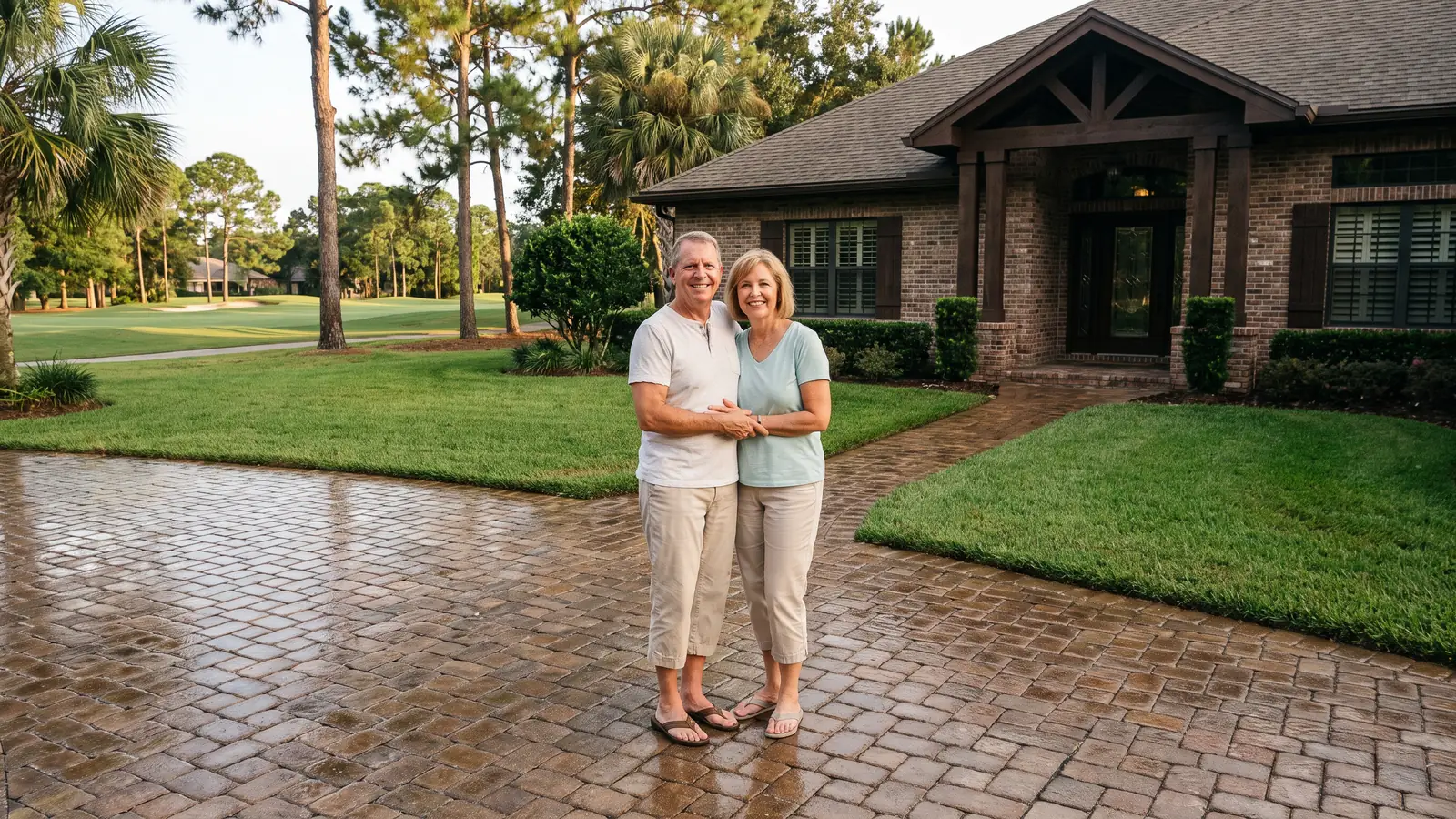
Paver sealing for Panama Park homes
Paver Sealing in Panama Park, FL
After the Trout River overflowed in 2022, Panama Park pavers may need a wash; call (904) 817-0508 for a free estimate.
- Brings out deeper paver color
- Fresh joint sand helps lock pavers in place
- Gives weeds less room to grow
- Makes the surface easier to keep clean
- Free estimate, no obligation
Request a Free Estimate
Free, no obligation.
Fast, careful paver sealing in Panama Park
Paver sealing reaches every part of Panama Park, from the Trout River bridge up to Buffalo Avenue. A local contractor can wash, re-sand and seal your driveway, walkway or patio, and the estimate is free of charge. Tap ask for a free estimate and a reply will reach you within 1 business day, usually much sooner.
You may be looking at a drive that went dull after the water came up, with a gray film in the low corner and tufts of green in the joints. Washed, refilled with sand and sealed, the same drive goes back to one steady color. If you would like to ask first, call (904) 817-0508 and describe what the pavers look like.
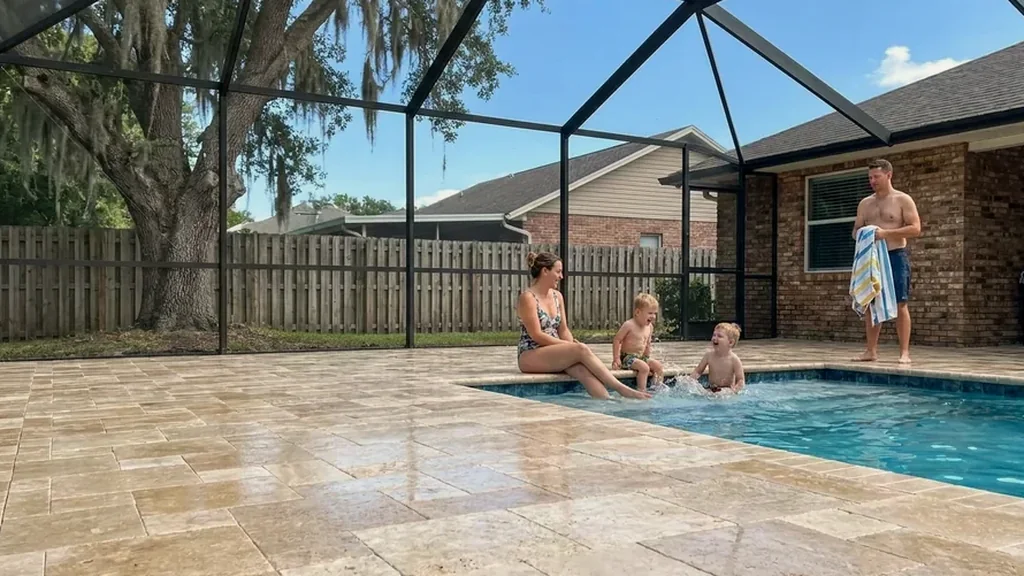
Why hire a local paver sealing contractor in Panama Park?
Panama Park sits between two rivers, so a paver job here starts with a question about water. A local contractor asks it every time, and you can ask for a free estimate to hear the plan for your lot.
A free first look
The contractor visits your Panama Park pavers at no charge and gives you a price before you decide anything.
A yardstick for any quote
Northeast Florida companies publish $1.75 to $3.25 per square foot for the clean, sand and seal, a range to hold any bid up against.
Flood cleanup counted in
If river water reached your pavers, the contractor plans the extra washing up front, so the price is not a surprise.
You stay in control
Finish and date are yours to pick. Nobody asks you to commit after the estimate, and a reply comes inside one business day.
Get Your Free Estimate in Panama Park
Tell us about your pavers in Panama Park.
Free, no obligation
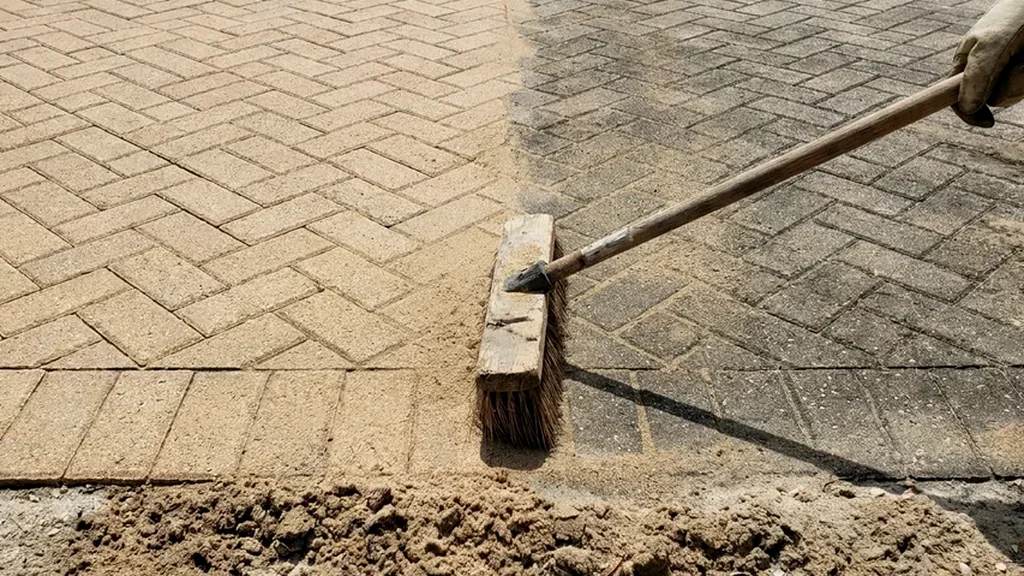
What paver problems show up most in Panama Park?
What river water leaves behind
The Trout River overflowed during Nicole in November 2022, and many homes along it were damaged. Its lower stretch is brackish and 0.6 miles wide near the St. Johns. Water that crosses a driveway leaves a film of whatever it carried. Sealer would lock that film in, so the surface needs a thorough wash first and a dry spell after it. Even a thin film matters, because the sealer bonds to whatever is on the surface. Plan on the wash taking longer than it would on a drive that never saw high water, and ask the contractor how long. Photos of the lot after past floods help the contractor see how far the water came, and so does a note about which corner holds water.
Weeks of wet ground after a big flood
News4JAX reported that after Irma in 2017 some Jacksonville neighborhoods stayed underwater for weeks, in places that had not flooded in a long time. Pavers that sit wet that long can lose base sand and shift. If your lot took water, ask the contractor to check for low or lifted sections before the wash, since sealing keeps a dip exactly as it is. Mud and sand can also settle in the joints, which means more sand needs to be replaced afterward. If you notice a soft corner or a drive that rocks underfoot, mention it at the first visit. Even a lot that dried out quickly can have a soft corner, so a walk across it with the contractor is worth the few minutes.
Shade and tannin from old street trees
An early description of Panama Park counted over 8,000 trees on its streets, including magnolias, oaks, olives and cedars. A paver company in the region says leaf tannins and tree cover create different needs than an open-sun driveway. Pavers under old limbs stay stained and damp longer, so the wash has to lift brown marks and green film before sealing. On a shaded Panama Park street that can mean green on one half of the driveway and clean pavers on the other. Sealing the whole area at once evens out the look, and it makes the next wash easier. A few hours with a hose will not lift tannin that has soaked in, so the contractor uses a proper wash and checks the result.
Brick beside concrete pavers
The early description also says most homes near 44th Street are brick. Concrete pavers laid next to brick walls or steps need rinse water kept off the brick and mortar. The color of brick and pavers will also look different even after sealing. A contractor who knows the older houses will point that out up front, so you can pick matte or wet look knowing how it will sit beside the brick. A good approach is to test a small hidden spot first, so you can see how the sealer changes the paver color next to the brick. That way the finish is chosen before the whole drive is done. Rinse water is aimed away from the brick so the pavers do not stain it.
White haze from a rushed coat
A Jacksonville exterior cleaning company says pavers turn white usually from trapped moisture, failed sealer, over-application or poor prep. After a river-side flood the joints can hold moisture for a long time. A surface that looks dry on top may not be. Waiting a full dry spell, then putting on thin even coats, is how to avoid a cloudy finish. The same goes for walks that sit low near the street, where water lingers after a storm. Ask the contractor to look at those low spots on the first visit. If the pavers sat in river water, give them extra days before the coat goes on.
Do I need to plan around the Trout River before booking a paver job?
Yes, if your lot is low or near the water, because the river decides when the pavers are ready. The Trout River is about 20 miles long, lies entirely within the Northside and is brackish in its lower section. After Nicole in 2022 it overflowed, and many riverside homes were damaged. When you ask for a free estimate, mention how close your lot is to the Trout River.
ZIP 32208, which covers Panama Park, counts about 57 percent of its occupied homes as owner-occupied and 13,004 households in all. Many of those households sit on streets between the Trout and the St. Johns. If your driveway has held standing water or river film, call (904) 817-0508 and describe where it collects.
The city's Panama Park, at 6912 Buffalo Avenue between 59th and 60th Streets, has a splash pad, tennis courts and ballfields, and it grew from ten acres bought in 1929. North Main Street runs along the commercial side of the neighborhood. Whichever side you are on, name it, and then ask for a free estimate for a free look.
What does paver sealing cost in Panama Park?
Northeast Florida companies publish prices from $1.75 to $3.25 per square foot for cleaning, sanding and sealing. An old failed coat means a strip-and-reseal, and that costs more. A Panama Park job near the river may add washing time, which can move the total within that range. Send ask for a free estimate for a figure on your lot.
Size also counts, because a small job carries nearly the same prep as a big one. A carport pad or a short front walk counts as a small job too. A short call to (904) 817-0508 will tell you roughly where your yard sits in that range.
| Paved area | Typical example | Clean, sand and seal |
|---|---|---|
| 300 sq ft | Small patio or walkway | $525 to $975 |
| 600 sq ft | Two car driveway | $1,050 to $1,950 |
| 1,000 sq ft | Large driveway or pool deck | $1,750 to $3,250 |
| 1,500 sq ft | Driveway plus pool deck | $2,625 to $4,875 |
Math based on the $1.75 to $3.25 per square foot that Northeast Florida paver companies published as of November 2026. Your contractor sets the actual price after seeing the surface. Repairs, leveling and stripping failed sealer are usually extra.
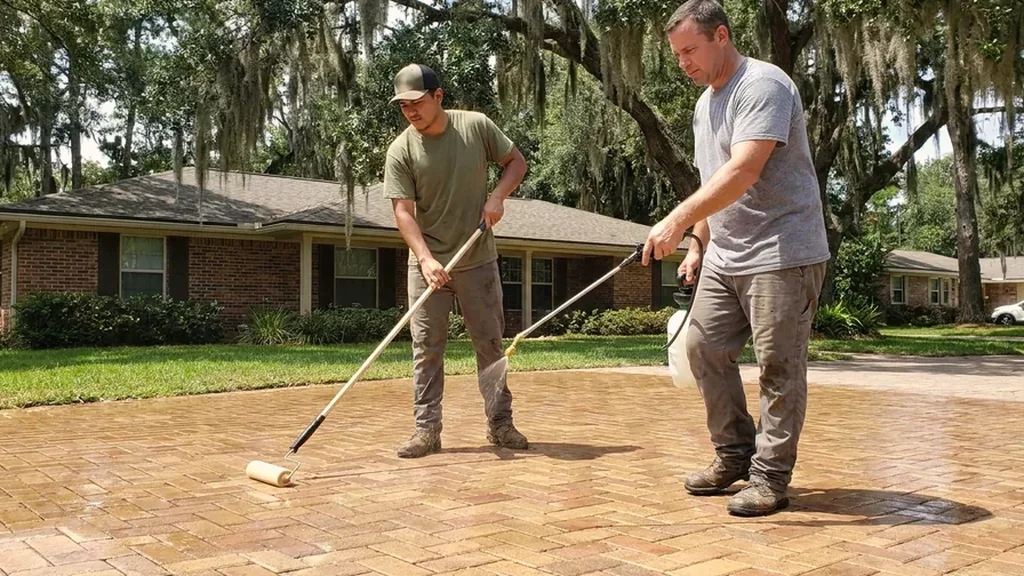
How does a paver sealing job work in Panama Park?
Ask about water, then walk the property
The contractor starts with a question about whether river water has reached your Panama Park lot and when. Then comes a walk to find low spots, lifted edges and any old coat. Sunken sections are reset first. A small test spot shows whether the old sealer is water-based or solvent-based, which decides what can go on next. Photos of the lot after past floods help, and so does a note about which corner holds water.
Wash the river film and green growth away
The wash clears river film, green growth under the trees and any stains. Rinse water stays off brick walls and steps where it can. Washing also pulls joint sand out. Once the surface is clean, the contractor shows you anything that will not fully lift, so you know what to expect. Brick walls and steps are rinsed gently so the mortar stays put.
Fill the joints and brush them tight
Fresh sand is brushed into every joint until it is full. Ground in Duval County is sandy, and a flooded lot can lose even more. Packed joints leave weeds little room and give the sealer something solid to hold. The extra is swept off. After a flood the joints may need more sand than usual, and the contractor tops them up before moving on.
Wait out the damp
Sealer needs a dry surface, so after cleaning or a rain the pavers get a full day to dry, or longer. Near the river, shaded pavers can take longer. The contractor will hold the job, and will call you with a new day, rather than seal over moisture that would turn the coat cloudy. After a flood or a long run of rain, that can mean several days, and you will be told as soon as the contractor knows.
Spray, back-roll and stay off
Sealer goes on from a sprayer and a back-roll works it into the joints. Local companies commonly put the span between coats at two to five years. Expect to walk on it within hours and to keep cars off for roughly a day. Sprinklers stay off until you are told. If a storm rolls in before the coat has cured, the contractor will tell you what to expect.
Complete paver services in Panama Park
At a Panama Park property the contractor works in five stages. First comes the inspection, then the wash, then new sand in the joints, then a wait for dry weather, and last the sealer. River film goes in the wash, never under the coat. For timing on your lot, call (904) 817-0508.
Driveways, front walks, carport pads and back patios are all common here. A low corner of the drive holds water longest, and a patio under old limbs stays stained and shaded. Edges beside the lawn collect soil. List what you have when you ask for a free estimate.
Brick is part of the picture here, so the finish matters. Matte sits calmly beside brick walls, while wet look deepens color and shows scuffs sooner. A sealer already on the pavers narrows the choice, since water-based will not go over solvent-based. For help choosing, call (904) 817-0508.
The river and the rain set the calendar. Most rain falls from May to September, and the driest weeks run from November through April. After any high water the pavers need extra drying time. To plan a day that works, ask for a free estimate.
Questions to ask before you hire
- Can you seal my pool deck and driveway on the same visit?
- How long do I keep cars and foot traffic off the pavers?
- Do you carry liability insurance, and can I see the certificate?
- What does the price per square foot include, and what costs extra?
- What finish do you recommend for my pavers: matte, natural or wet look?
- Is there a charge to come out and measure before I get a quote?
- How do you handle the paver edges next to my lawn and landscape beds?
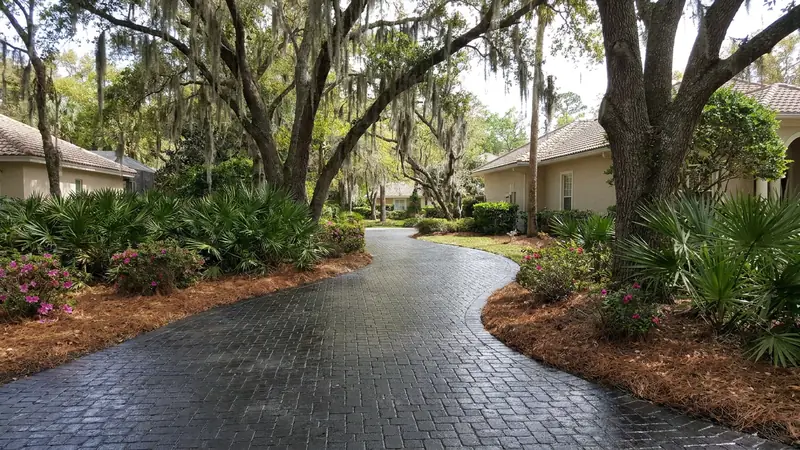
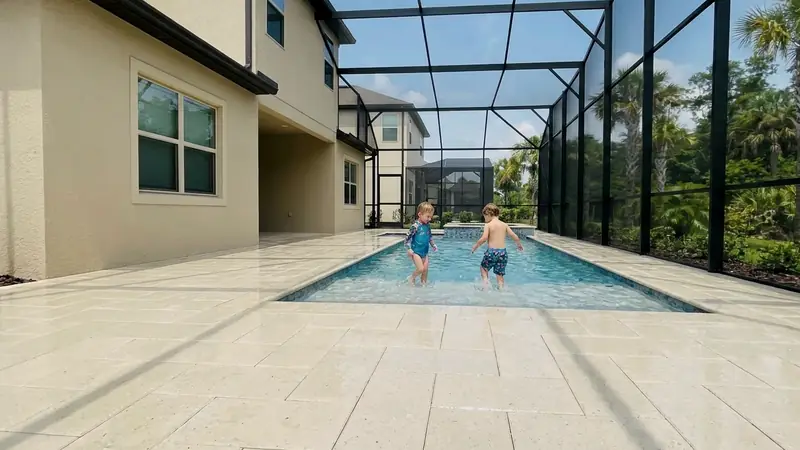
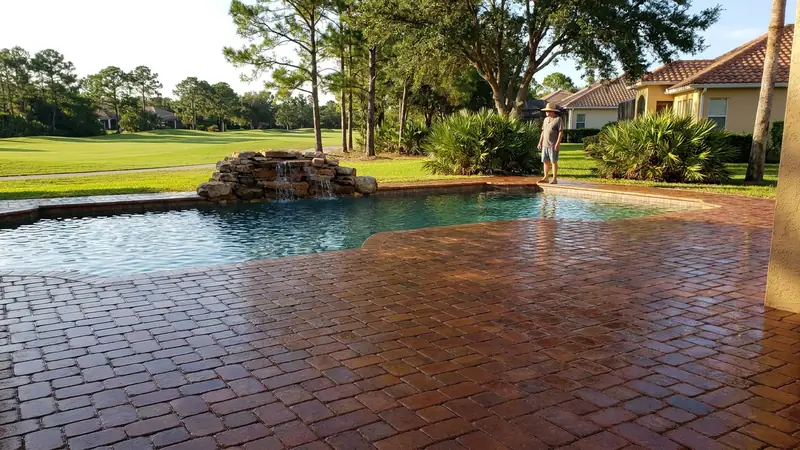
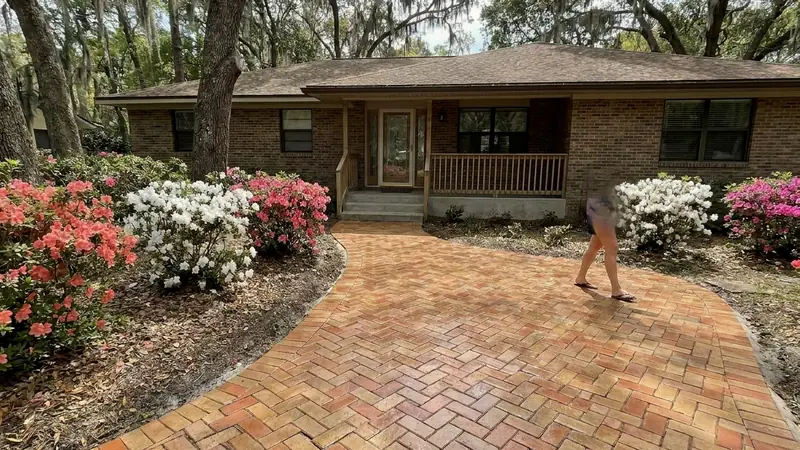
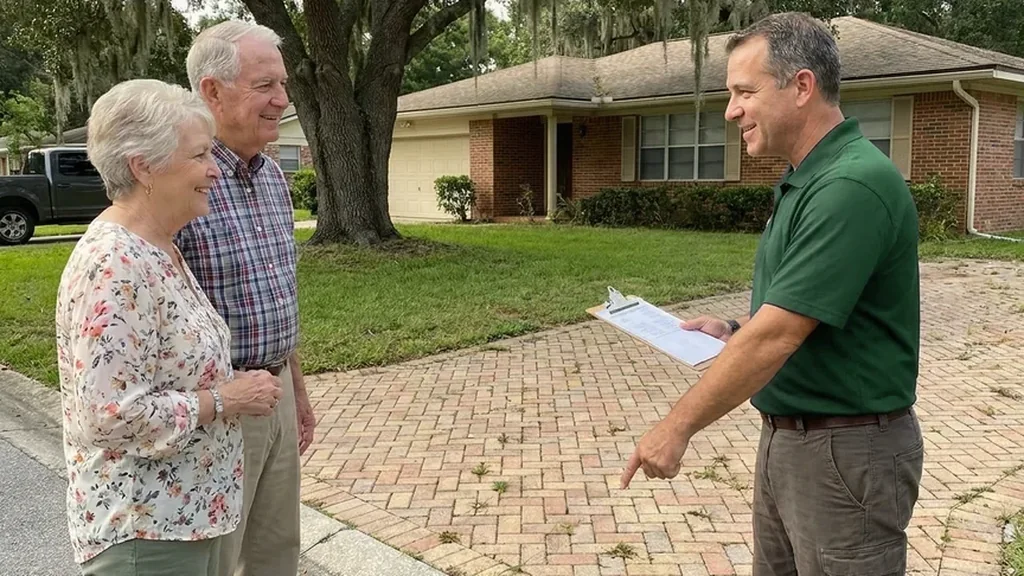
What do sealed pavers look like around Panama Park?
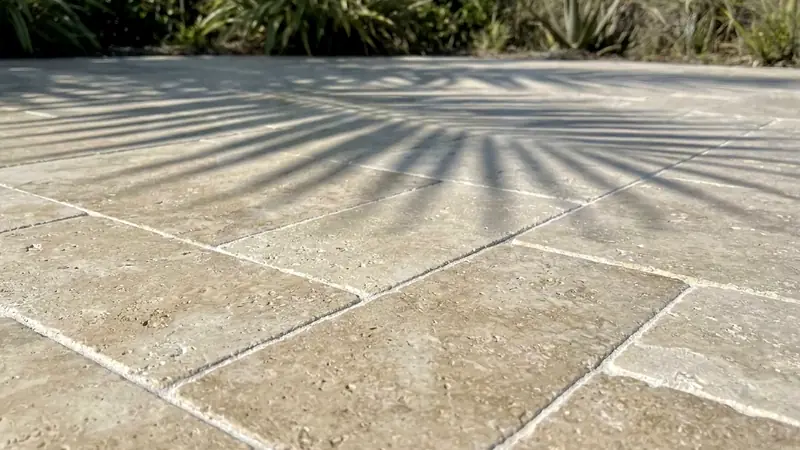
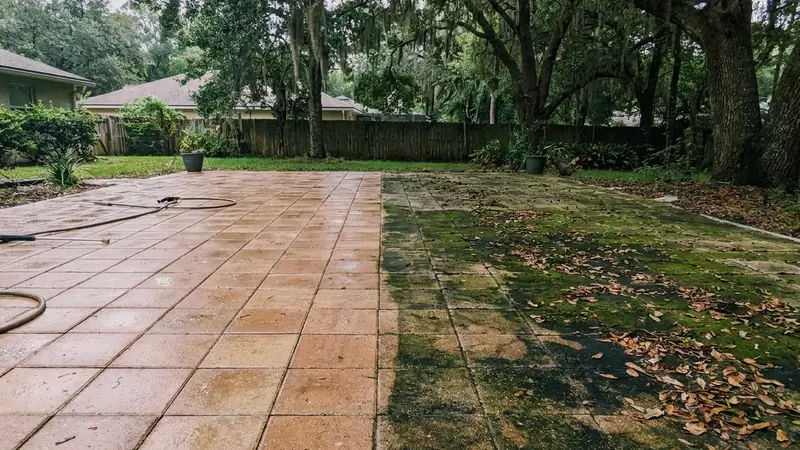
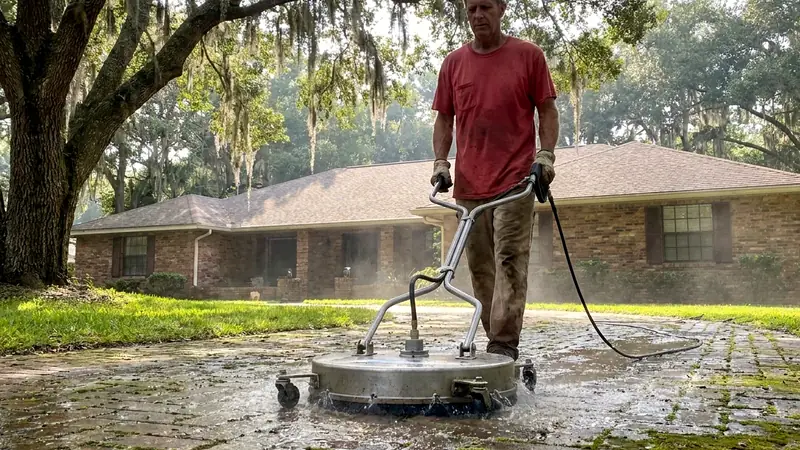
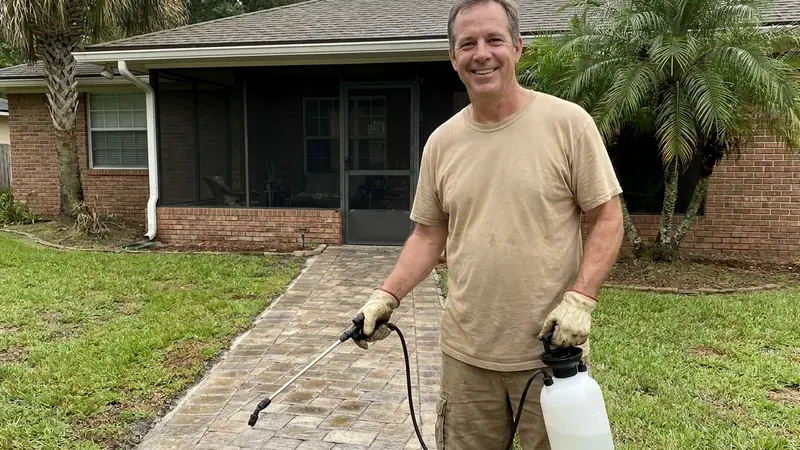
Why local matters in Panama Park
A contractor who works this neighborhood knows the Trout River can overflow and that a Main Street driveway is not the same as one near the water. That changes how much washing a job needs. Someone from far away may not ask. Call (904) 817-0508 to reach a contractor who knows the Trout River side of town.
Routes matter. The Trout River bridge and North Main Street are the main ways in, so a nearby contractor can plan around traffic. A short drive also means a quick first visit, and a quicker return if a storm moves the day. Reach out through ask for a free estimate to find out how soon someone can stop by.
The neighborhood is older and grew up around a railroad suburb, which means older lots, mixed repairs and brick beside pavers. A local contractor plans for those. If that sounds like your property, ask for a free estimate and mention what is next to your pavers.
How did a sawmill and a brick kiln shape Panama Park?
Charles Sibbald built East Florida's first steam-powered sawmill at Panama Park in 1828, and his son-in-law Farquhar Bethune opened the region's first brick kiln there. Wikipedia says a school designed by Henry Klutho went up in 1915, and Culver Elementary opened in 1916. Developer George Clark began selling lots in his railroad suburb in 1910. If you live near Culver, ask for a free estimate.
Along the water, the Trout River bridge pier dates to 1930 and the current swing bridge to 1938, and Bert Maxwell Boat Ramp opened in 1961 just west of the I-95 bridge. On North Main Street, Panama Park Pharmacy has been in business since 1928. If you live near one of these Panama Park places, call (904) 817-0508 and tell the contractor which street.
Frequently Asked Questions
Is it smart to seal pavers in Panama Park, Florida?
Usually, yes. A coat helps pavers hold color and joint sand against sun, rain and humidity, and it makes washing easier after high water. The coat does wear, and it has to go down on a dry surface.
How long do paver sealers last near the Trout River?
Local companies commonly put the span between coats at two to five years. A driveway that sees flooding or heavy shade may wear toward the short end. When drops stop beading and sink into the paver, the coat has reached the end.
Why does paver sealing cost so much in Panama Park?
The sealer itself is a small part of the price, and prep is the larger part. Washing, replacing lost sand and stripping a failed coat take time. A Jacksonville company also notes that smaller jobs cost more per square foot, since prep does not shrink with the surface.
Should pavers be cleaned, sand refilled and sealed in Panama Park?
Yes. Sealing over dirt or empty joints locks the problem in, and weeds come back where joints are empty. A contractor washes, replaces the joint sand and lets the surface dry before any sealer goes on.
How much does it cost to seal pavers in Panama Park?
Expect a range of $1.75 to $3.25 per square foot to clean, sand and seal, per Northeast Florida companies. Flood film and an old failed coat can add time. Have the total area listed in the quote, then compare it with other bids. A free estimate gives you a figure for your own lot.
Can pavers be sealed after the Trout River floods?
Yes, after the pavers are washed, refilled with sand and completely dry. After a flood, joints can hold moisture for a long time, so the contractor may wait longer than usual. Sealing over damp pavers is how a coat turns white.
Will sealing fix sunken pavers on my Panama Park driveway?
No, sunken pavers need repair before sealing, because sealing preserves any dip. After high water, ask the contractor to check for low spots. Resetting a section costs extra but keeps the problem from being locked in.
Does sealer cloud on pavers near brick?
Cloudiness comes from trapped moisture, a coat that is too thick or poor prep, not from the brick. Keeping rinse water off the brick and waiting for a dry day protects both. Ask for a thin, even coat.
Nearby areas we serve
Ready for a Free Estimate in Panama Park?
Call (904) 817-0508 and tell us about your pavers.
Free, no obligation