
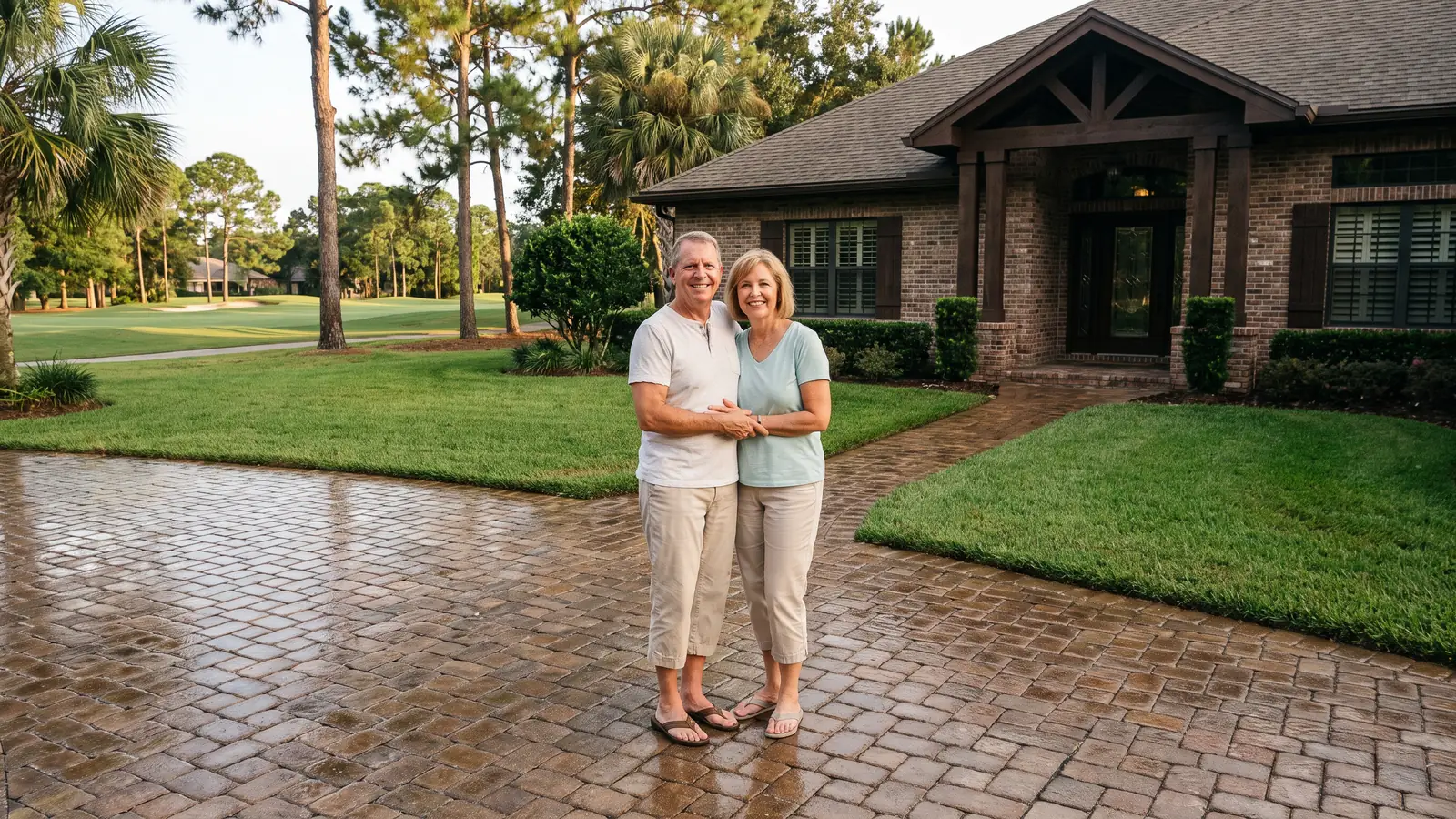
Paver sealing for Palm Valley homes
Paver Sealing in Palm Valley, FL
Palm Valley driveways and pool decks near the Intracoastal can get paver sealing and a free estimate, so call (904) 817-0508.
- Brings out deeper paver color
- Fresh joint sand helps lock pavers in place
- Gives weeds less room to grow
- Makes the surface easier to keep clean
- Free estimate, no obligation
Request a Free Estimate
Free, no obligation.
Fast, careful paver sealing in Palm Valley
Paver sealing in Palm Valley is available for driveways, lanais and pool decks from Canal Boulevard to the Intracoastal, and the estimate is free. A local contractor washes them, replaces the sand and applies the coat. Submit ask for a free estimate and expect a reply within 1 business day, often well before.
Salt and sun can leave a coastal driveway chalky and faded, with a green edge where the lawn sprinklers land and a dark patch where water sits after storms. A good wash, fresh sand and a coat bring back an even tone that sheds water. If you would rather talk it over, call (904) 817-0508 and describe what you see from your front door.
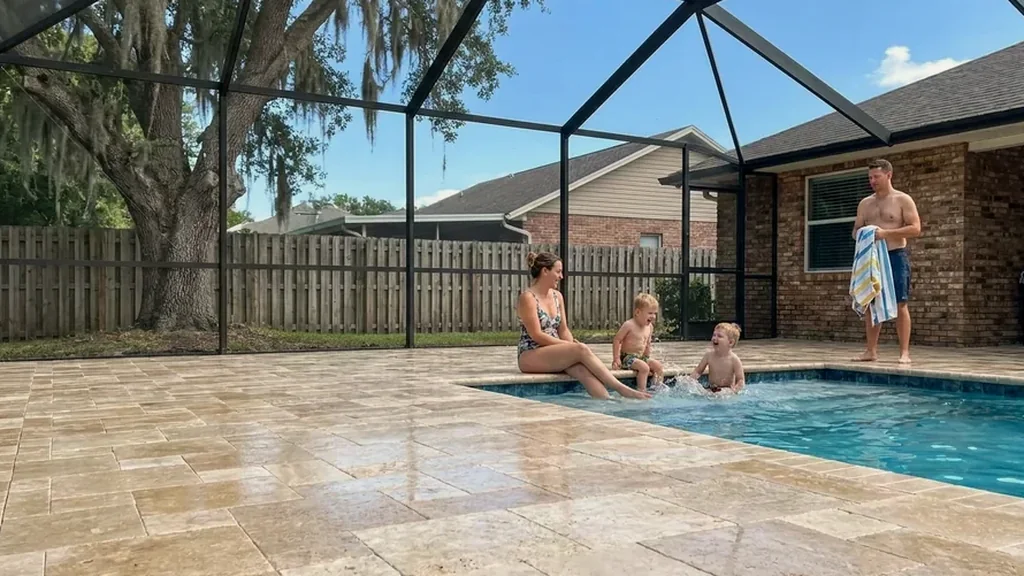
Why hire a local paver sealing contractor in Palm Valley?
Palm Valley sits between the Intracoastal and the ocean breeze, so salt, water and association rules all shape a sealing job. To learn what that means for your home, ask for a free estimate.
Salt-aware wash plan
Coastal air leaves salt on pavers. The free visit checks for chalky film before the contractor suggests a cleaning plan.
A range to hold quotes to
Published prices run $1.75 to $3.25 per square foot to clean, sand and seal. Ask a Palm Valley contractor to show the total area.
Timing around storms
Afternoon storms and standing water can move a job. A local contractor schedules with that in mind.
Easy to say no
Estimates in Palm Valley are free and carry no obligation. A reply comes within 1 business day.
Get Your Free Estimate in Palm Valley
Tell us about your pavers in Palm Valley.
Free, no obligation
What paver problems show up most in Palm Valley?
Salt film and chalky color
A paver maker writes that salt travels as airborne particles and can crystallize on surfaces as moisture evaporates. A Ponte Vedra paver company adds that salt settles into unsealed pores and, with sun, leaves pavers chalky. Pale pavers show splash marks and residue first. Palm Valley sits between the Intracoastal and the beach, so expect that dull, powdery look on open drives. A wash lifts the film, and a sealer helps keep the next layer of salt from settling into the pores.
Standing water after big rains
On October 7, 2026, Canal Boulevard in Palm Valley was underwater from morning into the afternoon, and water lingered in yards into the evening. Two days later, 2 to 2.5 inches fell in one morning, with ponding on Roscoe Boulevard. Water on pavers leaves silt and film, and sealer would trap it. A wash has to clear it first. After a day like that, ask the contractor to check the low end of the drive, where water stays longest and sand tends to go missing.
Joint sand that runs off
Coastal soil here is sandy, and St. Johns County storms can be heavy. A Ponte Vedra company says sandy ground plus summer rain plus any slope moves joint sand. A St. Augustine area company notes that many local installs were filled with play sand that storms and sprinklers wash out. Gaps then fill with dirt and weeds, so the joints need real sand. That is one reason a sealer matters here, since it helps bind the sand and keep it from running off in the next storm. Old Palm Valley homes date from 1993 to 1999, so many drives have been through decades of storms.
Green growth on shaded lanais
North-facing patios and anything under tree cover will green up, according to a Ponte Vedra company. The old hammock here was covered in oaks, magnolias and palms, and many lots still hold mature trees. Humidity and irrigation feed that growth. A shaded lanai needs a thorough wash before it is sealed. Green film left under a coat would show through and keep growing underneath. Palm Valley Gardens has homes from 1970 on and Plantation Oaks from 1985 on, so lots there are well established and shade is a regular part of the job.
Pool deck wear and splash
One company serving this county says pool surrounds need their own drying plan because shade, splash-out and constant moisture all hold water. Coastal properties often pair large drives, pool decks and irrigation. A Jacksonville company says pool decks need a sealer with an anti-slip additive. Ask for grip, and plan on a longer dry-out. Chlorine or a salt system can add residue that has to be rinsed away before sealing.
Do Palm Valley's neighborhoods and associations affect sealing choices?
Yes, since many Palm Valley communities have associations, and the housing mix is wide. Old Palm Valley homes date from 1993 to 1999, Plantation Oaks from 1985 to 2006, and Odom's Mill has more than 230 homes with a community pool. Census data puts the median home here at 1991. Tell the contractor your community when you ask for a free estimate.
The area is not all houses. About 2,500 units are in buildings of three to 19 units, so condos and townhomes sit beside single-family streets. Under Florida Statute 720.3035, a board can weigh in on appearance only as far as its declaration or guidelines allow. Ask your board about finishes, then call (904) 817-0508.
Along Palm Valley Road, the PGA Tour's property falls under the Palm Valley Overlay District, and the Sawgrass PLAYERS Club has a master homeowners association board. In a gated, association-run area, a natural-look sealer is usually the safer pick and a high gloss may need approval. Elevation also varies, with medians of 6 to 8 feet in listings. Share your street with the contractor when you ask for a free estimate.
What does paver sealing cost in Palm Valley?
The wash, sand and coat commonly run $1.75 to $3.25 per square foot, a range regional companies publish. Safe Touch says the same range holds across the First Coast and places Palm Valley on the route between Nocatee and Ponte Vedra. Salt film, shade growth and lost sand push a job toward the upper end. To price your pavers, ask for a free estimate.
Coastal homes often have large drives and pool decks, so total square feet matters most, and a quote should state the area. Stripping a failed coat adds cost, and smaller lanais cost more per foot. Pool decks may need a different product and a longer dry-out. Call (904) 817-0508 to find out which of these apply.
| Paved area | Typical example | Clean, sand and seal |
|---|---|---|
| 300 sq ft | Small patio or walkway | $525 to $975 |
| 600 sq ft | Two car driveway | $1,050 to $1,950 |
| 1,000 sq ft | Large driveway or pool deck | $1,750 to $3,250 |
| 1,500 sq ft | Driveway plus pool deck | $2,625 to $4,875 |
Math based on the $1.75 to $3.25 per square foot that Northeast Florida paver companies published as of November 2026. Your contractor sets the actual price after seeing the surface. Repairs, leveling and stripping failed sealer are usually extra.
How does a paver sealing job work in Palm Valley?
Look at the pavers and the exposure
The contractor checks how your Palm Valley pavers face the sun, shade and the wind off the water, and walks the whole job from the street to the back lanai. Sunken spots are reset first, because sealing over a dip only preserves it. An old coat is identified, since water-based sealer cannot go over solvent-based. Mention any past water on the lot. Bring up the sprinkler layout too, since heads aimed at pavers cause stains and mildew. Elevation varies here, with listing medians of 6 to 8 feet, and lower spots hold water longer after rain.
Wash off salt, silt and green film
The wash removes salt residue, algae and any silt from past water. Rust marks from irrigation are treated first. Deck rinse water is kept out of the pool, and chlorine residue is washed away. Brand-new pavers are different, and one company says to wait 60 to 90 days before sealing them so trapped moisture can escape. Plants and screens beside the work are covered.
Replace the joint sand
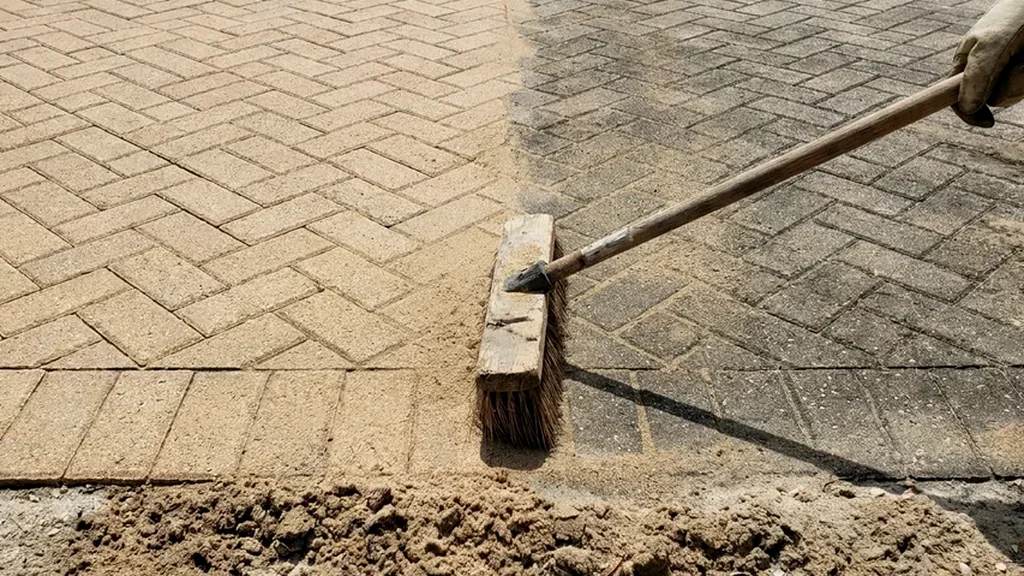
Washing takes out joint sand, so real joint sand goes back in and is swept clean, not play sand that storms and sprinklers move. With sandy ground and heavy storms, open joints invite weeds. Full joints keep pavers snug. This stage runs longer if the joints are badly worn. Colored sand is an option if you want the seams to blend with the pavers.
Wait for the pavers to dry
Sealer needs a dry surface. In humid months, drying after cleaning takes real time, and a shaded lanai lags a sunny drive. The contractor watches the forecast and avoids days with afternoon storms. Sealing damp pavers can leave the finish white. If the forecast turns, the job waits for another day. Standing water along Canal Boulevard in October 2026 shows how long ground can stay wet.
Apply the coat and keep cars off
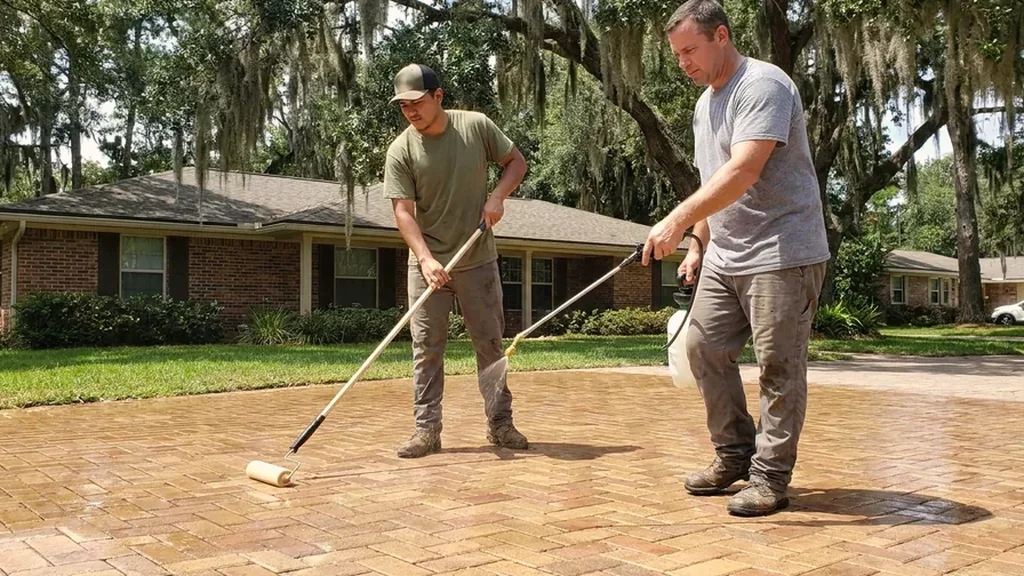
The coat goes on by sprayer, and a roller follows behind. Pool decks get a grippier product. The usual quote is two to five years between coats, though PaverGuard says coastal driveways may come due every 18 to 24 months. You can walk on it within hours, and cars should wait about a day. Ask for a note of the product used, so the next coat matches.
Complete paver services in Palm Valley
A Palm Valley visit starts with salt. Salt film and green growth are washed off, then real joint sand is packed in and the pavers are left to dry. The coat is the last step, never the first. Call (904) 817-0508 to ask how long each step runs on your property.
Big drives, lanais, pool decks and front walks are the usual list in Palm Valley. Open drives take sun and salt, lanais hold shade and decks take splash, so each needs its own wash and dry plan. Put every surface on the list when you ask for a free estimate.
Pick between film and penetrating sealers, then choose matte, satin or wet look if you go with film. Wet look shows scuffs sooner. Decks need grip, so ask about an anti-slip additive before you agree to anything. To talk through the right pick, call (904) 817-0508.
Coastal weather runs the schedule here. Afternoon storms are common in summer and humid mornings slow drying, and the surface must be dry before the coat. Cars stay off about a day afterward. To find a window that works, ask for a free estimate.
Questions to ask before you hire
- Do you carry liability insurance, and can I see the certificate?
- What finish do you recommend for my pavers: matte, natural or wet look?
- Do you wash with a surface cleaner or a hand wand?
- Is there a charge to come out and measure before I get a quote?
- Do you cover or mask plants, screens and light fixtures near the work?
- Do you fill the joints before sealing, and with what?
- What do you do if the sealer looks blotchy or peels later?
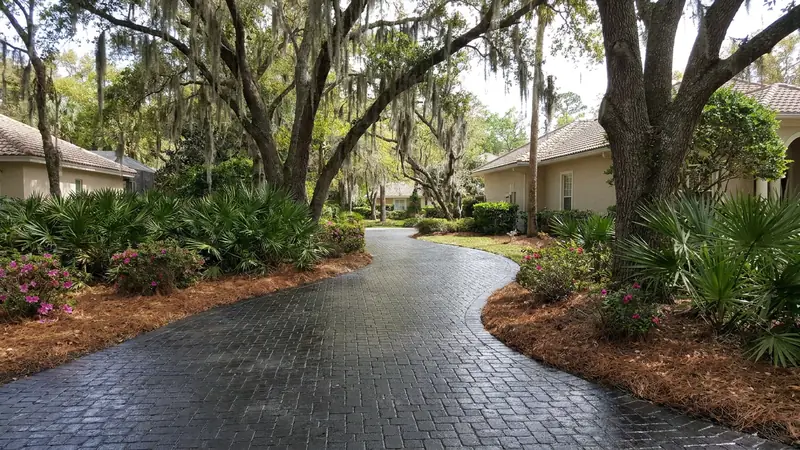
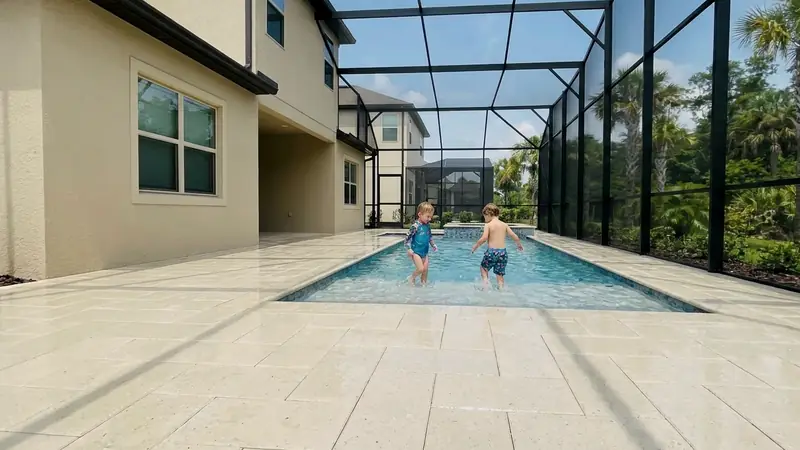
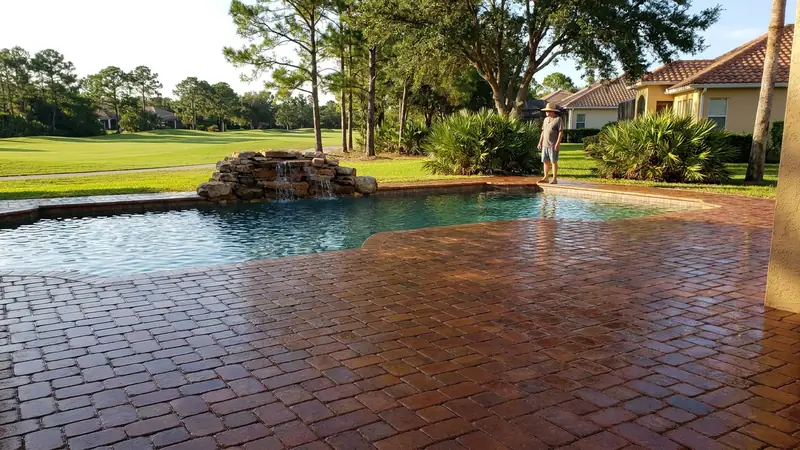
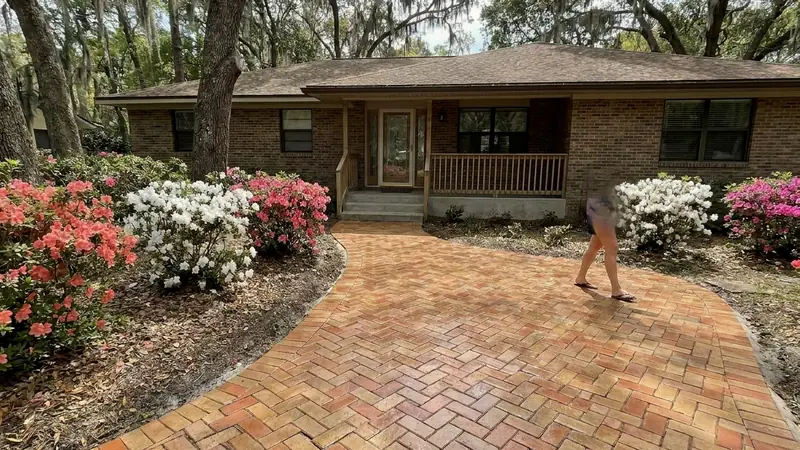
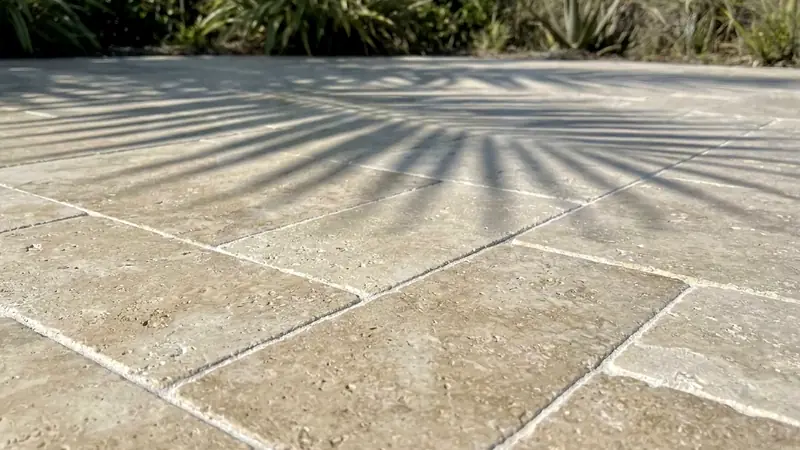
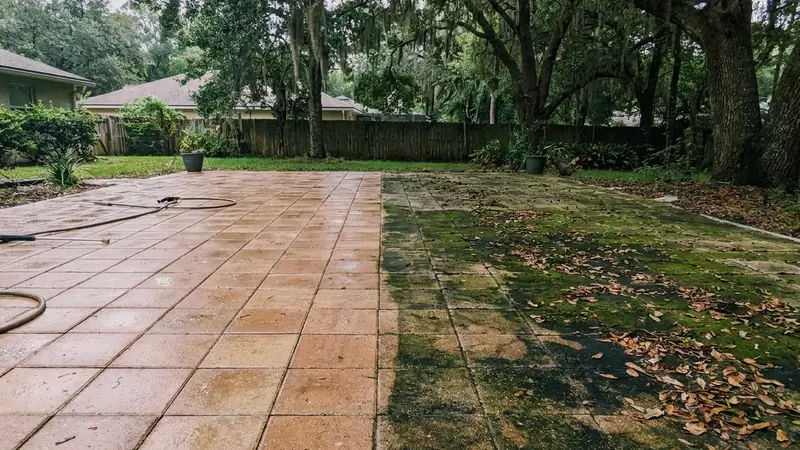
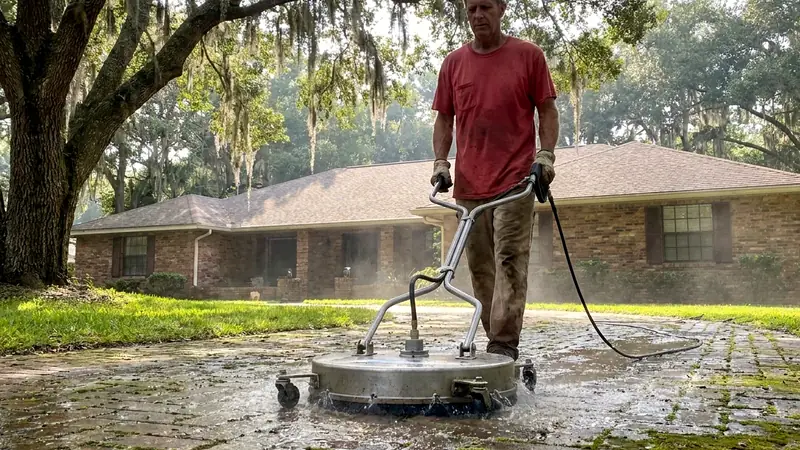
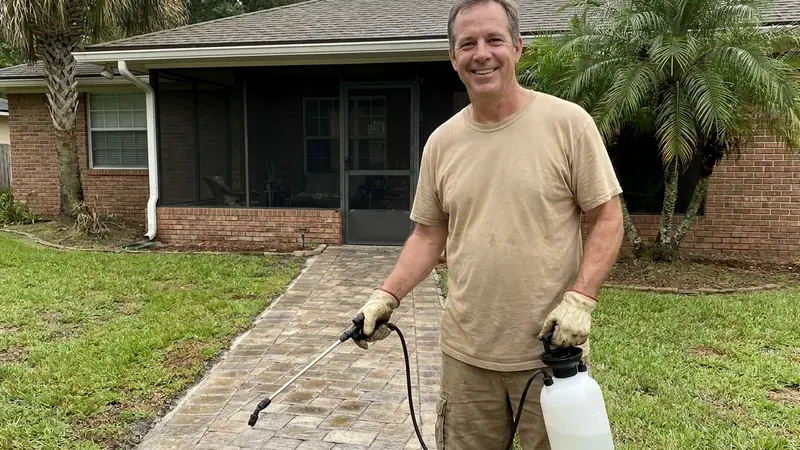
What do sealed pavers look like around Palm Valley?
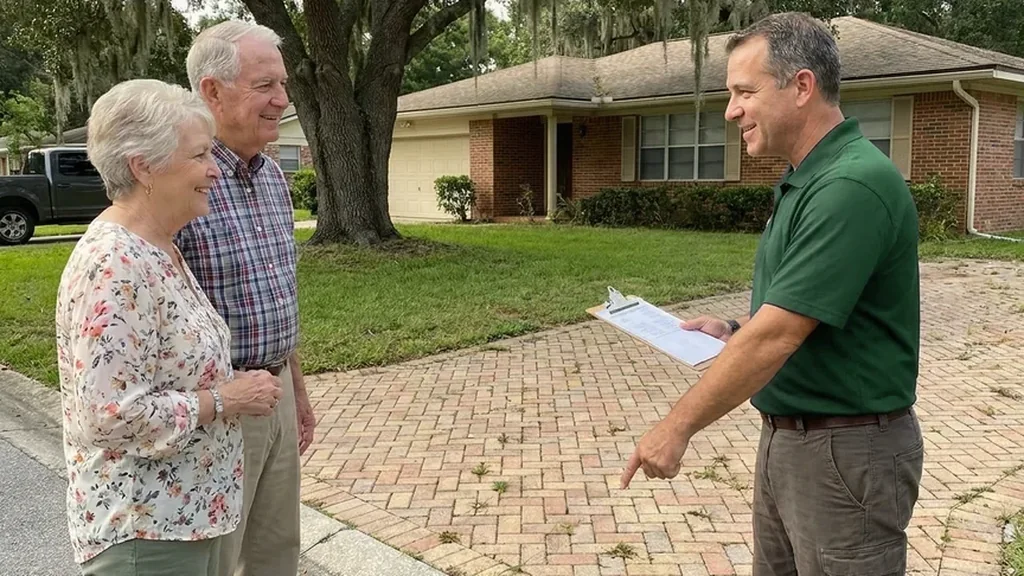
Why local matters in Palm Valley
A contractor who works Palm Valley knows how fast salt air dulls a driveway. PaverGuard notes that a sea breeze carries salty air over the Beaches, Ponte Vedra and Nocatee. That affects how soon you reseal, and a driveway near the water may need a fresh coat sooner than one inland. To plan around it, call (904) 817-0508.
Local knowledge also covers water. Canal Boulevard and Roscoe Boulevard have both held water after heavy rain, and Irma flooded homes backing up to the Intracoastal. A contractor from the area asks about the lot's history before choosing a wash plan. You can ask for a free estimate and share what you have seen.
The mix of homes matters too. Palm Valley holds single-family streets, condos and gated communities, each with different rules. A local contractor knows to ask about gate access and association guidelines before the first visit. If yours has them, ask for a free estimate and mention it.
What is the history behind Palm Valley's name?
The name comes from the palms that once covered the hammock. The area was called Diego Plains until the name changed to Palm Valley in 1906, and families shipped about 400,000 palm fronds a year to northern churches. A canal dug in 1908 linked the San Pablo and Tolomato rivers, and the Intracoastal opened in 1912. Near Canal Boulevard, ask for a free estimate to ask about your pavers.
Today, the Palm Valley Community Center on Canal Boulevard is one of the oldest community associations in North Florida. The fixed four-lane Palm Valley Bridge on County Road 210 opened in 2002 over the Intracoastal. Roscoe Boulevard backs up to the waterway. Close to the Intracoastal or the bridge, call (904) 817-0508 and name your street.
Frequently Asked Questions
What is the average cost to seal pavers in Palm Valley?
The commonly published range is $1.75 to $3.25 per square foot to clean, sand and seal. Large Palm Valley drives and pool decks raise the total, since the price is set by area. Stripping old sealer costs more, and the contractor quotes it after looking at the joints.
Is it good to seal pavers in Florida salt air, and does it help in Palm Valley?
Yes, sealing protects pavers from sun, rain and salt. A Ponte Vedra company says salt settles into unsealed pores and leaves pavers chalky. A coat keeps that residue from soaking in, and it slows the sun fade that Florida pavers face. It helps the joint sand survive summer downpours.
How often do you need to reseal pavers in Palm Valley?
Quotes run from two to five years, and coastal drives sit at the short end. PaverGuard says driveways near the coast may need one every 18 to 24 months. Check whether water still beads. A paver that darkens as water soaks in is due for a new coat.
Why does paver sealing cost so much near the coast in Palm Valley?
Most of the cost is prep. Washing off salt and green film, replacing joint sand and stripping an old coat take hours. Pool decks add drying time and special products. Smaller lanais also cost more per foot because setup does not shrink.
Does Palm Valley flooding affect when pavers can be sealed?
Yes. After water sits on pavers, they need washing and full drying before any sealer. Silt and film would be trapped under the coat otherwise. Tell the contractor if the lot took water, so the wash plan fits.
Can a Palm Valley association limit my sealer choice?
Maybe. Many Palm Valley communities have associations, and your declaration sets the limits. A natural-look sealer is the easier route, and a high gloss deserves a call to your board first.
Who decides on sealing a shared condo walkway in Palm Valley?
The condo association usually does. Florida Statute 718.113 makes maintenance of condominium common elements the association's responsibility. About 2,500 Palm Valley units sit in buildings of three to 19 units, so ask your board before booking anything.
Does salt air change how often I should seal in Palm Valley?
It can. PaverGuard says driveways near the coast need resealing about every 18 to 24 months, and a Ponte Vedra company says salt settles into unsealed pores and leaves pavers chalky. Inland-style two to five year spans may not fit an open drive near the Intracoastal.
Can the old sealer on my Palm Valley pavers be covered with a new coat?
Sometimes, if the old product is known. Water-based and solvent-based sealers do not mix, so the contractor identifies it first. Failed or peeling sealer may need to be stripped, which costs more than a plain clean.
What sealer works on a Palm Valley pool deck?
Pool decks need grip. A Jacksonville company says to use a sealer with an anti-slip additive, and a company serving this county says pool surrounds need their own drying and application plan. Ask for the grip product by name, and ask how long the deck should stay dry after the coat.
Should brand-new pavers in Palm Valley be sealed right away?
Usually not. A St. Augustine area company says new pavers should wait about 60 to 90 days, so trapped moisture can escape and white haze can surface and be treated first. Coastal homes often add pool decks and large drives at once, so ask which areas are old enough to seal now.
Do older Palm Valley homes need different paver care than newer ones?
Often yes. Census figures put the median home here at 1991, and Old Palm Valley listings show homes from 1993 to 1999. Older pavers may carry worn sand, failed coats and root lifts, while newer ones may only need a first sealing after the waiting period.
Ready for a Free Estimate in Palm Valley?
Call (904) 817-0508 and tell us about your pavers.
Free, no obligation