
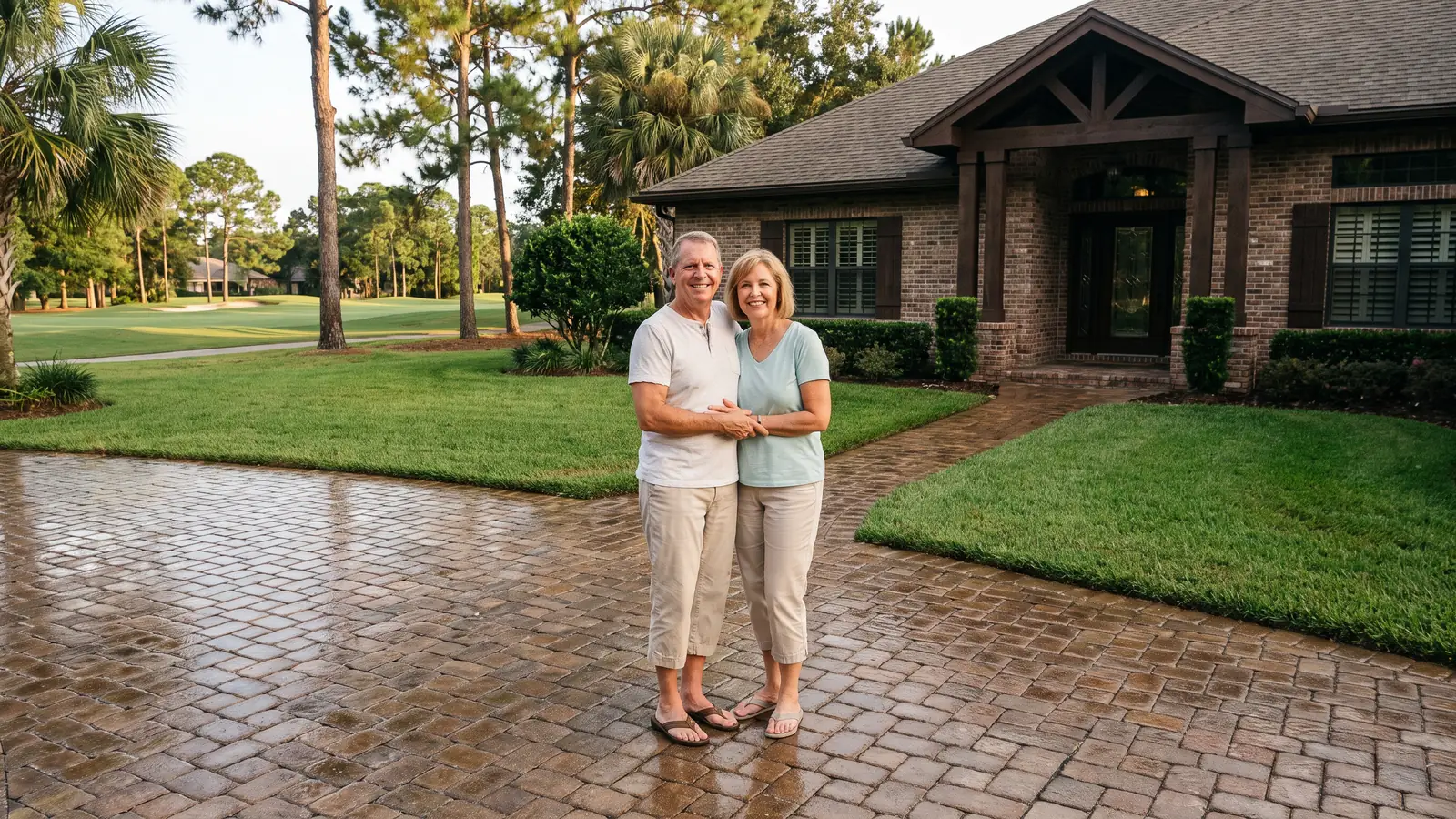
Paver sealing for Jacksonville Beach homes
Paver Sealing in Jacksonville Beach, FL
Between the pier and the Intracoastal, Jacksonville Beach pavers face sun and salt, so call (904) 817-0508 for a free estimate.
- Brings out deeper paver color
- Fresh joint sand helps lock pavers in place
- Gives weeds less room to grow
- Makes the surface easier to keep clean
- Free estimate, no obligation
Request a Free Estimate
Free, no obligation.
Fast, careful paver sealing in Jacksonville Beach
Paver sealing in Jacksonville Beach starts with a free estimate from a local contractor. The contractor cleans, re-sands and seals driveways, patios and pool decks, and you hear back within 1 business day, often much sooner. To start, call (904) 817-0508.
Salt and sun do slow work on a beach-town driveway. The color goes flat, sand drifts out of the joints and green creeps in along the shaded edge. A wash, fresh sand and a new coat bring the surface back to one even tone, so if yours looks tired, ask for a free estimate.
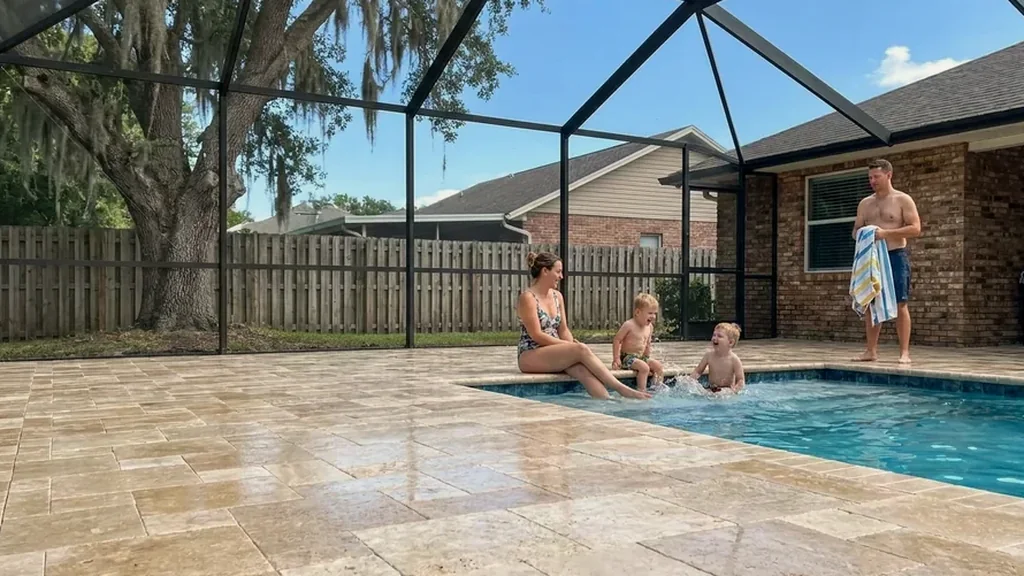
Why hire a local paver sealing contractor in Jacksonville Beach?
People in Jacksonville Beach tend to hire a local paver contractor because lots are tight, the ocean is close and the city has its own paver driveway rules. For a plan that fits your street, call (904) 817-0508.
A free estimate
A contractor measures your Jacksonville Beach pavers and quotes a price at no charge. Nothing is agreed until you say so.
A price you can check
Companies in the region commonly publish $1.75 to $3.25 per square foot to clean, sand and seal. Hold any quote up against that range.
Small lots, clear pricing
A Jacksonville cost guide says small projects cost more per square foot. A measured quote shows exactly what your patio or walkway costs.
The finish is your call
Pick matte for traction and a natural look, or a wet look for deeper color. The estimate carries no obligation.
Get Your Free Estimate in Jacksonville Beach
Tell us about your pavers in Jacksonville Beach.
Free, no obligation
What paver problems show up most in Jacksonville Beach?
Salt film and faded color
A beaches paver company says salt in the air settles on unsealed pavers and works into the pores, and that sun and salt leave older pavers chalky. A Jacksonville company adds that sun fades unsealed concrete pavers noticeably within 3 to 5 years. A paver maker notes that pale pavers show splash marks and salt residue sooner. Sealing slows all of that, which means the color holds longer and rinsing the surface gets easier. Pavers on the oceanside blocks get the most salt, so they are the first to show it.
Blown sand and storm water in the joints
A Jacksonville paver company says fine beach sand blows in while the original joint sand washes out. Water went over the dunes during Hurricane Matthew in 2016 and reached at least 2nd Street. In December 2016, driveways near 12th Avenue South flooded in a downpour. Joints that take that kind of water need a refill before sealing. A sealed, filled joint also sheds less sand the next time a storm rolls through, so the repair lasts.
Settling under turning tires
One Jacksonville company says the weight of turning tires loosens joint sand and lets pavers settle. Beach lots are small, so the driveway turns often and the same spots take the load. A coat laid over a sunken spot only keeps the sunken spot. Dips get reset first, and the price should say so. Look for a low spot where water pools after rain, because that is often where a paver has already sunk.
Sealer that went white
A Jacksonville paver company says nearly every call about white or cloudy sealer traces to damp pavers or a coat laid on too thick. Humid months make drying time matter more. Jacksonville Beach is wet from June through September, with 7.19 inches in September on average. A white coat usually has to be stripped before a new one goes on. That is why drying time and thin, even coats matter more than a quick job.
Rust and oil on the driveway
Irrigation water can leave orange rust on a driveway, and cars add oil drips and tire marks. Sealing locks in whatever is on the surface, so stains are treated before the coat. Pale pavers show every mark. Ask the contractor what will lift and what may stay faint. Old rust stains can be stubborn, and a clear answer now beats a surprise later. Honest answers up front mean no surprises once the pavers are clean.
Do older beach streets and newer neighborhoods need different paver care?
Do lot size and association rules change the job?
Yes, mostly in how big the lots are and who sets the rules. San Pablo Terrace, off Penman Road, has homes built from 1955 to 2005, and Sea Grove near the South Pablo Beach grid has 174 homes built in the 1920s. Ocean Terrace dates to the early 1980s, has an association and sits near South Beach Park. Tell the contractor your neighborhood when you ask for a free estimate.
Does the city have its own paver rules?
The city has its own paver rules. Jacksonville Beach says many homeowners use city right-of-way next to their homes, and that most of that use needs a revocable encroachment permit. Its paver driveway standards were updated in October 2023, and the urban trail plan will remove and replace some driveway aprons. Check with the city before you spend on an apron, then call (904) 817-0508.
Who decides on shared courtyards and walks?
Shared spaces work differently. A Jacksonville paver page says courtyards and walkways in a community are usually managed by the association, and that a wet look or new color can need approval. A gate can also restrict when a contractor may arrive and where a truck may park. Ask your board what applies, and then ask for a free estimate.
What does paver sealing cost in Jacksonville Beach?
What does a clean, sand and seal cost per square foot?
A clean, sand and seal is commonly listed at $1.75 to $3.25 per square foot across this region. Jacksonville Beach driveways and patios are often small, and a Jacksonville cost guide says smaller projects cost more per square foot because prep does not shrink with the surface. Prep also grows with locked gates, stairs and narrow side yards, according to the guide. To see where your lot lands, ask for a free estimate.
How does an old, failing coat change the price?
Old sealer can change the price. The same guide says stripping a failed coat adds cost, and it names white, hazy or flaking sealer as the usual reason. Pool decks and shaded patios need extra cleaning for algae, mildew and leaf stains, and that extra work is built into the quote. Ask for the area and the products in writing, or call (904) 817-0508 and ask what applies to your property.
| Paved area | Typical example | Clean, sand and seal |
|---|---|---|
| 300 sq ft | Small patio or walkway | $525 to $975 |
| 600 sq ft | Two car driveway | $1,050 to $1,950 |
| 1,000 sq ft | Large driveway or pool deck | $1,750 to $3,250 |
| 1,500 sq ft | Driveway plus pool deck | $2,625 to $4,875 |
Math based on the $1.75 to $3.25 per square foot that Northeast Florida paver companies published as of November 2026. Your contractor sets the actual price after seeing the surface. Repairs, leveling and stripping failed sealer are usually extra.
How does a paver sealing job work in Jacksonville Beach?
Walk the lot and check the old coat
The contractor looks at where water drains on your Jacksonville Beach lot after rain, where tires turn and where shade sits. Sunken spots get marked for repair, since sealing keeps whatever is under it. If an earlier coat is down, the contractor identifies it first, since a water-based product cannot cover a solvent-based one. Mention your association if you have one, and any trouble spots you already know about, such as a low corner where water sits. Notes on where the hose can reach make the quote more exact.
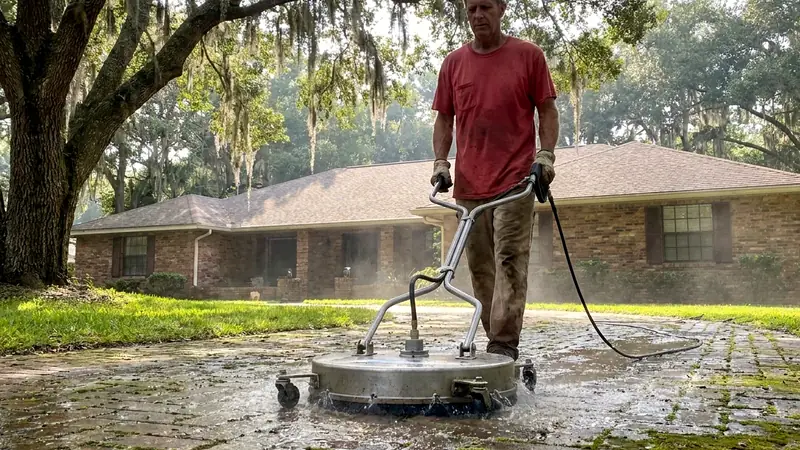
Wash the salt and stains away
Cleaning removes salt film, green growth, oil and rust. Pale pavers show marks quickly, so stains get attention here. The district's water shortage rules can limit street and pressure washing, so ask how the contractor will handle that. Rinse water stays off plants and off the neighbor's side where it can, and the wash is planned to use only the water it needs. A paver maker says pale pavers show salt residue and sand quickly, so the finished surface is checked both damp and dry.
Sweep sand back into the seams
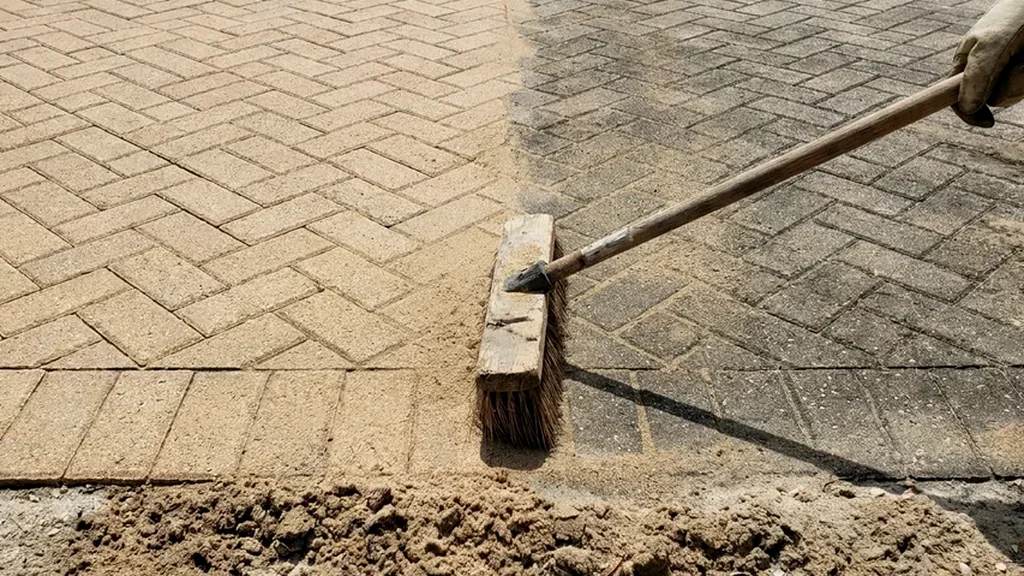
Washing pulls sand out of the joints, and beach wind and storms move more of it. Fresh sand goes in before sealing, never after, so the coat holds it. Full joints keep weeds and ants out and keep edges snug. The surface is swept clean once the joints are packed, so no loose grit is left under the sealer to scratch the finish. Beach wind and storms move more sand than an inland lot sees, so a few joints get a second look after the first rain.
Let the surface dry
Sealer goes on a dry surface only, and damp pavers are behind most white or cloudy coats. In humid months drying takes patience. Shaded courtyards and pool edges dry last. A good contractor waits and checks the forecast rather than sealing on a schedule, even if that means coming back the next morning. Spring and fall bring the steadier dry stretches, and November averages only 2.50 inches of rain.
Seal and set the finish
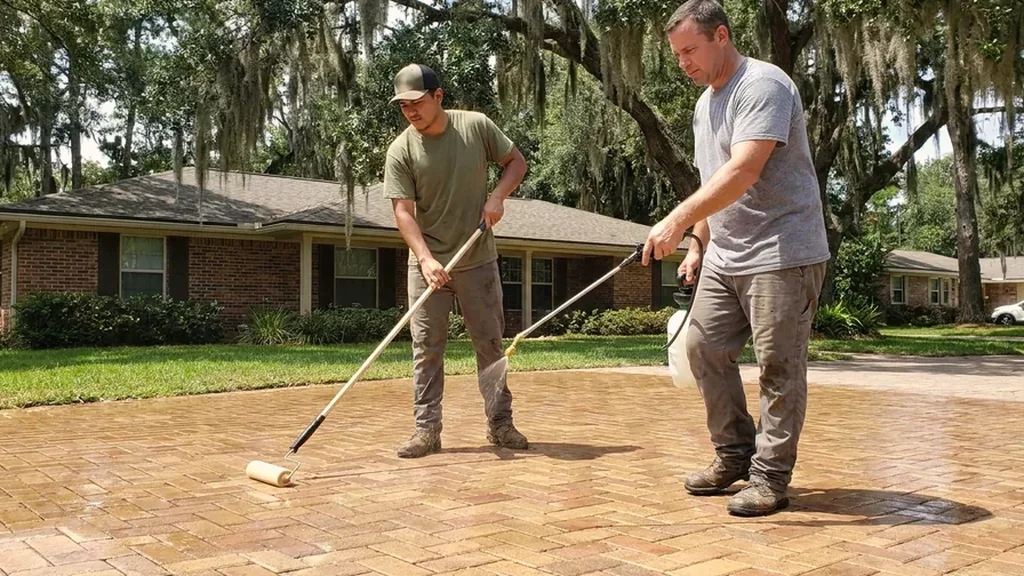
Professionals typically spray the sealer and then back-roll it. Your chosen finish, matte or wet look, goes on last. Sealed pavers take foot traffic within hours, but tires need roughly a day. A later sprinkle test shows the result, since beading water means the coat holds.
Complete paver services in Jacksonville Beach
How do the four steps of a beach job run?
A Jacksonville Beach job moves in four steps. The contractor washes off salt film, refills the joints with sand, waits for a dry surface and then seals. Sand goes in before the coat, never after, so the sealer can lock it in place. To ask how long each step might take on your lot, call (904) 817-0508.
Which small-lot surfaces take the most wear?
Driveways on small beach lots take turning tires and sprinkler rust, while pool decks take salt, chlorine and splash. Courtyards and walkways between houses stay shaded and damp. One company says decks with chlorine or salt systems need resealing about every 18 to 24 months. Tell the contractor which surfaces you have when you ask for a free estimate.
Film sealer or penetrating sealer, which fits?
Sealer comes in two main kinds. A film sealer sits on top and gives a matte, satin or wet look, while a penetrating sealer soaks in and keeps traction when wet, so a cost guide says most pool decks get it. Changing finishes later means stripping the old coat. Call (904) 817-0508 to talk through which fits your pavers.
How does hurricane season move the schedule?
The Atlantic hurricane season runs from June 1 to November 30 and peaks on September 10. A Jacksonville cost guide says fall sealing after hurricane season protects pavers through the dry winter, and spring sealing sets the surface before summer humidity. November is the driest month here, at 2.50 inches. To pick a date that fits your street, ask for a free estimate.
Questions to ask before you hire
- What do you do if the sealer looks blotchy or peels later?
- Do you fill the joints before sealing, and with what?
- Can you seal my pool deck and driveway on the same visit?
- Is there a charge to come out and measure before I get a quote?
- How do you handle the paver edges next to my lawn and landscape beds?
- What happens if a thunderstorm hits the afternoon after the job?
- Can you give me a start time window so I can plan around it?
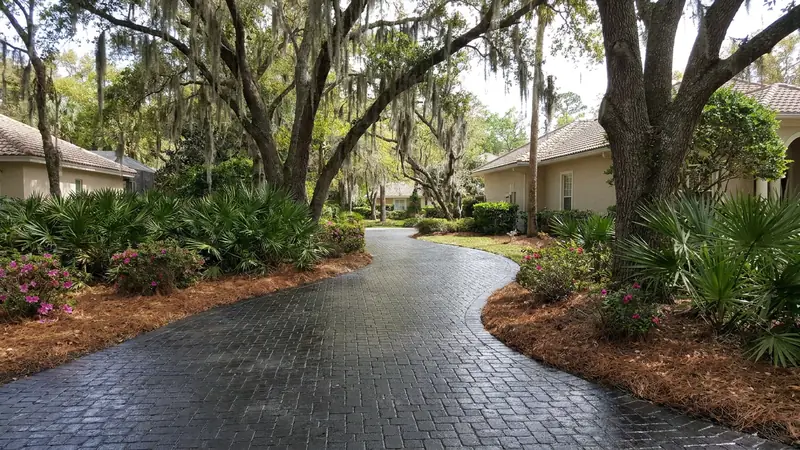
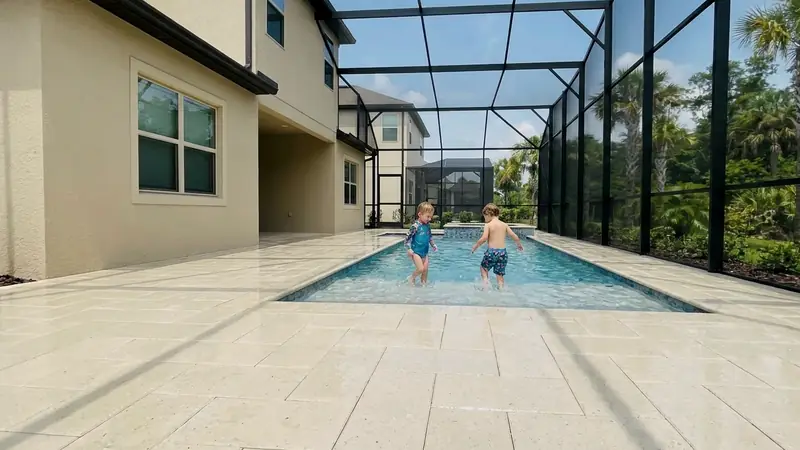
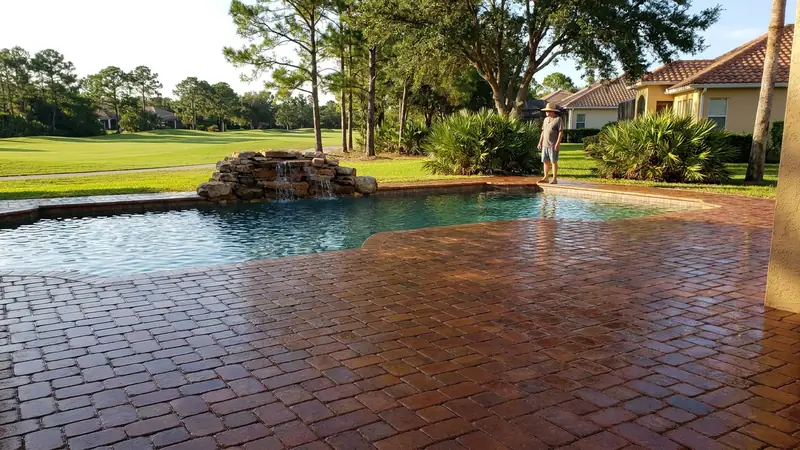
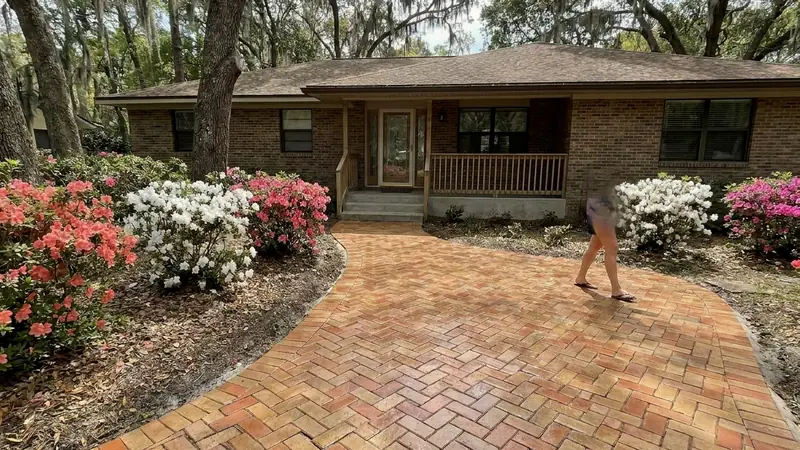
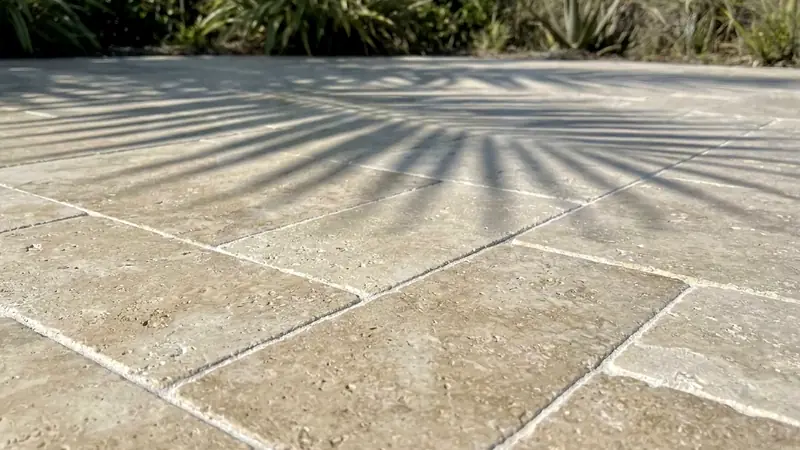
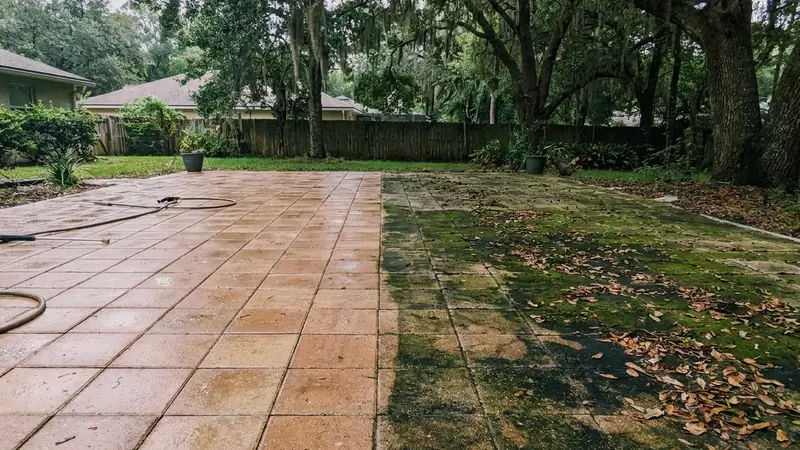
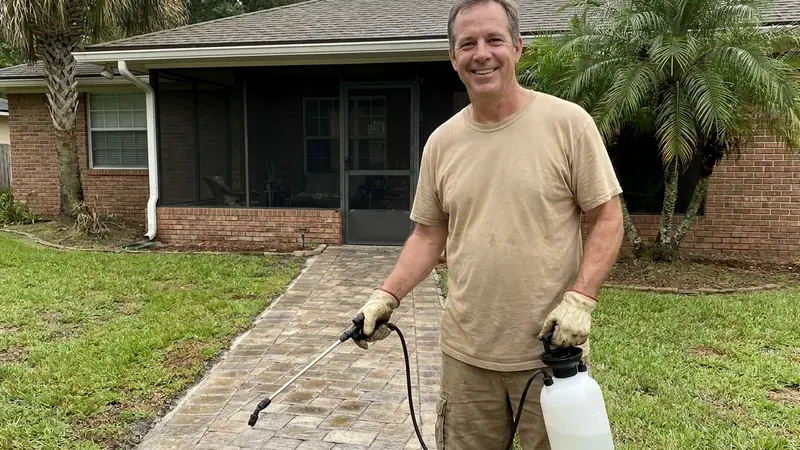
What do sealed pavers look like around Jacksonville Beach?
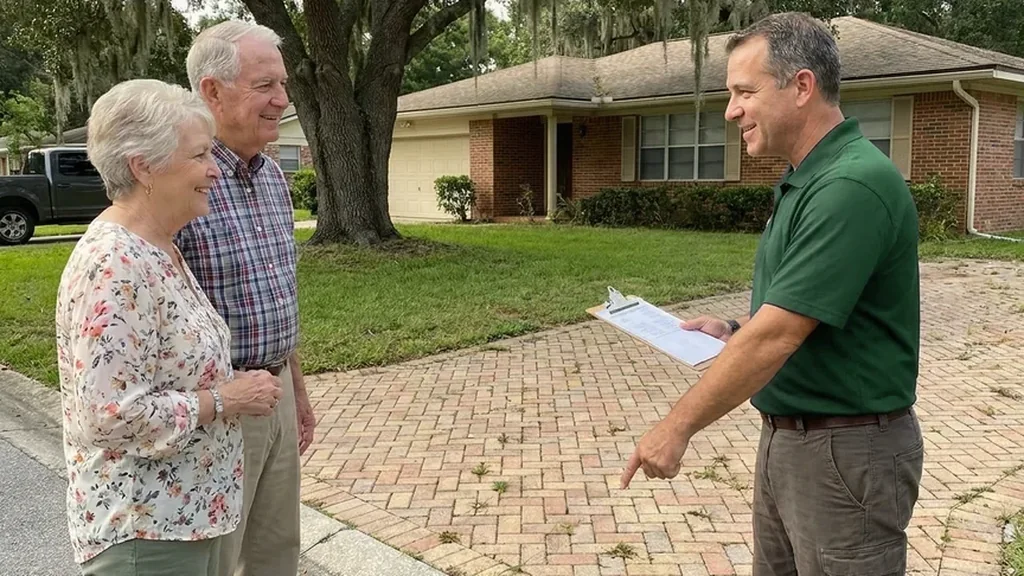
Why local matters in Jacksonville Beach
Why does the water district matter to a sealing date?
A contractor who works the Beaches knows the water district's rules. In November 2026 a Phase III shortage was in effect for Duval County, and the district says street and pressure washing face added limits. That can change how a job is planned. For a contractor who works around that, call (904) 817-0508.
How does storm history shape the timing?
Local knowledge also covers storm timing. Hurricane season runs through November, and Matthew pushed water inland over the dunes in 2016. A contractor who knows this coast will plan around the forecast and the tide. Ask how a delay would be handled when you ask for a free estimate.
What city paperwork can touch a driveway apron?
City paperwork is another local matter. Driveway aprons and the strip of right-of-way beside a house fall under city rules, and the paver standards changed in 2023. A contractor who has worked here knows to ask about them before touching an apron. If your pavers meet the street, call (904) 817-0508.
What makes Jacksonville Beach different from the rest of Duval County?
How did the city stay separate from Duval County?
It runs its own city government, and it kept it when Duval County merged with Jacksonville in 1968. The Sculls built the first house in 1884 and named the place Ruby, and it became Pablo Beach in 1886 and Jacksonville Beach in 1925. The Beaches Museum at 381 Beach Boulevard keeps an 1886 chapel and an early post office. If you live near the museum, ask for a free estimate.
Why does the pier matter to the neighborhood?
The pier is the landmark most people know. Hurricane Floyd took it in 1999 and Matthew damaged it in 2016, and the rebuilt pier, about 1,300 feet long and raised for storms, reopened on July 6, 2022. Casa Marina Hotel, a 1925 Mission-style building, and the plaza at 11 1st Street North are close by. Near any of these places, call (904) 817-0508.
Frequently Asked Questions
Is it good to seal pavers in Jacksonville Beach?
Usually yes, because sun, salt and storm water all work on unsealed pavers here. A Jacksonville company says unsealed concrete pavers visibly fade within 3 to 5 years in this sun. Sealing also slows joint washout and mildew. A free estimate will show what your surfaces need, and the contractor can point out any spots that are already worn or stained.
How long do paver sealers last at Jacksonville Beach?
Sealers are usually quoted at two to five years per coat. One company says driveways in full sun and pool decks with chlorine or salt systems need a new coat about every 18 to 24 months. Shaded patios with light traffic can go 24 to 36 months. Near the ocean, plan on the shorter end. A contractor can check how your coat is holding up when you ask for an estimate.
How much does it cost to have pavers cleaned and sealed in Jacksonville Beach?
Published prices for a clean, sand and seal in this region land between $1.75 and $3.25 per square foot. Small lots cost more per square foot, and stripping an old coat adds cost. Ask for the area and products in writing so you can compare bids on the same terms. A bid that leaves out the joint sand or the stripping is not the same job.
Why is paver sealing so expensive?
The sealer itself is a small part of the price. A Jacksonville company reports 2 to 3 hours of prep behind each hour of sealing. Washing, drying, re-sanding and any stripping all take time. A written estimate shows where your Jacksonville Beach price comes from, and the price per square foot is easy to check against the published range.
Is there a downside to sealing pavers near the beach?
The downsides are upkeep and timing. A coat wears and needs redoing, a wet look shows scuffs sooner than matte, and sealer needs a dry surface, so wet weather can move your date. A gloss finish without anti-slip additive is slippery by a pool. Switching finishes later means stripping the old coat, so choose with care the first time.
Can I seal my Jacksonville Beach driveway during the water shortage?
Possibly, but ask first. The district's Phase III shortage was in effect in November 2026, and it says street and pressure washing face added limits. A contractor can tell you how cleaning will be done and whether your date needs to move. Rules can change, so confirm the current stage with the district or the city before booking.
Do I need city approval to change my paver driveway in Jacksonville Beach?
It can depend on the work. The city says most use of right-of-way beside a home needs a revocable encroachment permit, and its paver driveway standards were updated in October 2023. Sealing is not named, so call the city before touching an apron. Keeping a note of who you spoke with helps if a question comes up later.
When is the right time of year to seal pavers in Jacksonville Beach?
Fall and spring are the usual picks. A Jacksonville cost guide says sealing in fall, once hurricane season ends on November 30, protects pavers through the dry winter, and spring sealing sets the surface before summer humidity. November is the driest month here, at 2.50 inches of rain on average. September, at 7.19 inches, is the hardest month to get a dry day.
Will salt air ruin my pavers at Jacksonville Beach?
Not by itself. A Jacksonville paver company says pavers stand up well to salt near the ocean and that the base and joints are what fail. A paver maker adds that airborne salt can crystallize on a surface as moisture dries, and that routine rinsing helps manage the buildup in coastal areas. Fresh joint sand and a sealed top keep the base in better shape.
Does storm flooding change when I can seal at Jacksonville Beach?
It can. Water went over the dunes during Hurricane Matthew in 2016 and reached at least 2nd Street, and a December 2016 downpour flooded driveways near 12th Avenue South. Pavers that took water need time to dry, and the joints may need new sand. Tell the contractor if your street flooded.
What should I ask a contractor before sealing my Jacksonville Beach pavers?
Ask what the square-foot price covers, which sealer and finish go on and how the joints get filled. Ask how a rain delay is handled and how long to stay off the surface. A clear written estimate answers most of these before any work starts.
How long should I stay off pavers after sealing?
Shoes are fine within a few hours. Wheels should wait about a day, depending on the sealer and the weather. Humid or shaded areas can take longer, so ask the contractor for a time. Moving cars to the street the night before makes the day go smoothly.
Ready for a Free Estimate in Jacksonville Beach?
Call (904) 817-0508 and tell us about your pavers.
Free, no obligation